“GT” Insight Bites: What’s AI doing for you?
In what way is artificial intelligence (AI) changing the way you work, hire, learn, or teach?
With perspectives from senior people in travel & tourism’s business, academic, activist, airline, and NGO worlds — and even from Iran — there is more depth in this compilation of “GT” Insight Bites than you might initially presume; despite AI being “the hottest (and maybe the most boring) subject of the moment”, as one respondent described it.
As a non-technical person trying to live in the moment, I agree. While AI is indeed boring to the likes of me — technically minded futurists would disagree — I know it cannot be ignored. And, as evidenced by “GT’s” transparent use of AI, I find it quite helpful.
Have a thought to share?
Respond in the comments at any time. Or write a Bite of your own.
Bites menu
AI is ‘amplifying’ expertise for climate action
Olly Wheatcroft, Programme Manager, SUNx Malta, UK
Artificial intelligence (AI) is fundamentally reshaping how we work, learn, and deliver impact, particularly in knowledge-intensive fields like climate action in travel & tourism.

At Climate Friendly Travel Services (part of the SUNx Group), AI is changing our work by transforming what has traditionally been a slow consultancy process into a scalable, accessible digital solution.
We are developing an AI-enabled framework that uses advanced language models, such as ChatGPT, to support the rapid creation of tailored Climate Friendly Travel Action Plans (CAPs) for tourism businesses and destinations.
Through a structured, conversational interface, the tool assesses a user’s current climate actions, data readiness, and emissions context.
It then generates a practical, personalised CAP aligned with Nationally Determined Contributions, the Paris Agreement 1.5°C goal, the Sustainable Development Goals (SDGs), and the Global Biodiversity Framework.
This changes how we work by allowing us to focus less on repetitive plan development and more on strategic oversight, quality assurance, and stakeholder engagement.
It also changes how we learn and teach.
AI enables us to codify expert knowledge into smart prompt frameworks, making best-practice climate planning available on demand to small- and medium-sized enterprises (SMEs), destination management organisations (DMOs), and local authorities that may lack in-house expertise.
From a growth perspective, AI allows us to move from bespoke advisory services to tech-supported capacity building at scale.
It opens new opportunities for partnerships with companies, DMOs, certification bodies, and industry associations seeking practical, cost-effective climate solutions.
In short, AI is not replacing expertise; it is amplifying it.
By lowering barriers to action, it enables more tourism stakeholders to move from awareness to implementation, faster and more effectively, at a time when climate action cannot wait.
AI is an antidote to the blank page
Willem Niemeijer, CEO, YAANA Ventures, Thailand
For me, artificial intelligence (AI) has replaced staring at a blinking cursor.

Like many people, I don’t struggle most with doing the work, but with starting it. Whether it is a strategy paper, a website, a board memo, or one of the many half-formed ideas scribbled in my notebook, the first step is often the hardest; and slightly intimidating.
I use AI as a brainstorming partner. ChatGPT is still my go-to, though I occasionally use Grok as well. I ask a simple question, throw in a rough brief, and within seconds I have an outline, a set of steps, or a proposed structure.
Is it perfect? Rarely. Is it nuanced? Often not. But it does something powerful: it turns fog into shape. Once there is something on the page, my own thinking can kick in; refining, rejecting, re-ordering, and injecting experience and opinion. Writer’s block dissolves because the work has begun. It is a productivity tool if there ever was one.
The same applies to tasks I frankly find a chore, such as writing job descriptions. AI is remarkably good at producing a solid first draft: responsibilities, competencies, structure, even tone. From there, I can focus on what really matters: cultural fit, expectations, and the unspoken realities of the role. The human bits.
That distinction matters. I don’t see AI as a replacement for judgement, creativity, or leadership. It lacks context, lived experience, and intuition. It may understand the company’s stated purpose, but it doesn’t know the lived history of a team, internal dynamics, or the subtle difference between what sounds right and what will actually work.
But as an assistant? Tireless, fast, and surprisingly helpful.
AI doesn’t replace the craft; it lowers the friction to practise it. In itself, that is quietly changing the way we work, learn, and create.
AI can be a ‘constructive force’ for ‘meaningful tourism’
Wolfgang Georg Arlt, Executive Director, Meaningful Tourism Centre, Nepal
A group of authors from the Meaningful Tourism Centre has just finished a book chapter on the relationship between artificial intelligence (AI), transformation, and ‘Meaningful Tourism’. It is scheduled to be published in a few months in a book about AI and transformation.

In the conclusion, the authors state that digitisation, AI, and automation are reshaping tourism more rapidly and comprehensively than earlier technological waves such as the internet or mobile platforms.
AI is no longer a peripheral efficiency tool but a system-level infrastructure that mediates demand, allocates resources, shapes visibility, and defines performance.
If tourism continues to rely on quantitative, growth-centred business models, AI risks becoming an accelerant of existing structural problems. These include ecological degradation, cultural commodification, exclusion of host communities, concentration of economic benefits, and reduced transparency through asymmetric data ownership.
A decade ago, the Paris Agreement and the Sustainable Development Goals (SDGs) reflected optimism that global development trajectories could be redirected toward sustainability and equity.
The growing emphasis on resilience instead signals a more sober recognition that tourism and society are now engaged in an uphill struggle to adapt, absorb shocks, and achieve a slower deterioration rather than restore past conditions. Within this reality, incremental optimisation and voluntary sustainability commitments are insufficient.
The establishment of a ‘Meaningful Tourism Economy’ therefore emerges not as a normative aspiration, but as a strategic necessity. Meaningful Tourism provides a systemic response to inevitable transformation by reframing success around stakeholder well-being, ecological stewardship, experiential depth, and long-term value creation.
Within such a framework, AI can function as a constructive force — supporting learning, coordination, transparency, and adaptive governance — rather than as a driver of extractive optimisation.
AI is ‘a means to an end, not an end in itself’
C Michael Hall, Dean’s Chair in Marketing, Sustainability and Society, Massey University, New Zealand
Whether we like it or not, artificial intelligence (AI) is affecting the way we and our colleagues and students work. Humans are close adherents of the ‘law of least effort’, which means that they will take the easiest path.

However, this does not necessarily mean that it will be the best path, especially when considering the quality of result and the nature of the learning process, if that is a goal.
I have no doubt that AI is a valuable tool. But to maximise its value requires considerable skills. The old adage from information sciences — GIGO (‘garbage in, garbage out’) — certainly holds true with contemporary AI. The quality of results depends on the quality of the questions asked and the tool’s use.
So many students and colleagues (and businesses and consumers) do not frame questions in a way to generate the best results. Instead, their strategy is one of ‘satisficing’, but often with a low threshold of acceptability.
Furthermore, they often have too much faith in the results they generate and do not go back and check the accuracy of what they have been provided with. This situation is likely to get worse given the amount of ‘AI slop’ that is being generated by consumers, businesses, and, yes, by academics as well.
The above is critical to working, hiring, learning, and teaching processes. AI is a potentially invaluable tool, but it is just that. It needs to be understood, used, and played with.
It is a means to an end, not an end in itself.
That is how we must approach hiring: finding people with AI skills who can also see the bigger picture. This makes them more flexible and advantageous employees
This also applies to the learning processes; preparing people to be AI-ready; familiar with, but not dependent on, AI. One still needs to be able to think for oneself if one is to adapt and thrive in a world grounded in change.
AI enhances the human touch in community-based tourism
Pham Phi Anh, Deputy Head of Project Development — Fundraising Unit, Anh Duong Center, Vietnam
In the non-governmental organisation (NGO) and community-based tourism sector, artificial intelligence (AI) is often viewed with scepticism. However, when utilised through a lens of social responsibility and transparency, it becomes a powerful bridge.

At our organisation, we leverage AI not to replace the human touch, but to enhance it in three specific ways.
- Clarity in communication. AI helps us refine complex technical reports into accessible language that resonates with local communities and donors alike.
- Breaking language barriers. It allows for the rapid translation of project goals, ensuring that grassroots stakeholders are never ‘lost in translation’ and can participate fully in decision-making.
- Data-driven accountability. By streamlining data analysis, we can provide more frequent and accurate reports on project progress, such as the impact of clean water systems on local health.
For us, AI is an administrative engine that frees up our team to do what matters most: spend time in the field, listen to the community, and build sincere, trust-based relationships.
We published an AI-produced magazine to be read at 30,000 feet
Zohreh Khosravi, Content Manager, flysepehran.com, Iran
When the use of artificial intelligence (AI) in content & digital marketing was first discussed among our team, some of us feared that this technology would replace human employees. This fear was exacerbated by the fact that early AI versions produced unreliable Persian and Arabic content, making it difficult for us to trust or reference their outputs.

This situation led us to a different idea: We decided to publish a trustworthy travel magazine whose production process would be based on AI. We had two main goals:
First, we wished to demonstrate that AI would not replace our colleagues. Instead, it would encourage them to learn new skills such as prompt writing, content creation, editing, image creation, and magazine layout.
Second — and more importantly — we wanted our passengers to be the very first to read a fully AI-produced magazine at 30,000 feet.
As a result, issue No. 24 of the Sepehran Airlines magazine was published in September 2023 as a bilingual edition. AI was used in selecting topics, writing articles, designing pages, and creating images. One of issue 24’s appealing features was the comparison between real photographs of destinations and AI-generated images.
The project took about three months to complete and required careful planning, teamwork, and learning new skills; especially prompt writing. At the beginning, we faced many challenges due to limited data and the difficulty of generating Persian content.
Based on what we learned publishing the AI edition of the magazine, we continue to integrate AI into our workflow. We still use AI for image and video production, text editing, headline selection, content SEO optimisation, narration production, and other processes.
Our experience has shown that, contrary to initial fears, AI did not eliminate jobs. Instead, it helped our team acquire new skills, expand professional capabilities, and ultimately produce more creative content.
What do you think?
Share your own thoughts in a comment below about how artificial intelligence (AI) is changing the way you work, hire, learn, or teach.
SIGN IN or REGISTER first. (After signing in you will need to refresh this page to see the comments section.)
Or write a “GT” Insight or “GT” Insight Bite of your own. The “Good Tourism” Blog welcomes diversity of opinion and perspective about travel & tourism, because travel & tourism is everyone’s business.
This is an open invitation to travel & tourism stakeholders from any background to share their thoughts in plain English with a global industry audience.
“GT” doesn’t judge. “GT” publishes. “GT” is where free thought travels.
If you think the tourism media landscape is better with “GT” in it, then please …
Previous “GT” Insight Bites
- What’s the point of UN Tourism?
- Tourism’s biggest threats, opportunities: five years to 2030
- Do fun and politics mix? Can we ‘leave our cares behind’ when we go on holiday?
- Overtourism and overimmigration are the same?
- What is ‘authenticity’ in travel & tourism?
- Undertourism: Who’s suffering, and why?
- Tourism, war, and peace
- Signalling or substance in tourism: What’s your take?
- Visitor value, values, volume: What’s good where you are?
- Outbound doesn’t care about sustainability | Well-being must include meaning
- Is a travel & tourism career still attractive? Important things to understand in 2025
- Wishwashing tourism
- Butler’s conundrum: Air travel and ‘sustainable’ tourism
- What is tourism’s biggest opportunity and/or threat where you are in 2025?
- “GT” Insight Bites: Nostalgia
- “GT” Insight Bites: Geopolitics and tourism
- Tourism stakeholders: Who has an outsized voice? Who has no voice? Who cares?
- Would you abolish taxes on tips?
- Three critics walk into a bar …
- How are emerging technologies transforming the travel & tourism industry?
- What does it mean to be critical of tourism?
- What constitutes ‘progress’ for travel & tourism in 2024?
- Considering a career in tourism? Important things you should know in 2024
- What did tourism learn from the COVID-19 pandemic?
- In 2024, what are the best opportunities for tourism over the next five years?
- Tourism’s biggest challenges & threats over the next five years to 2028
- On empowerment, promotion, and the power of expression
- On enrichment, repatriation, the double-edged blade, and war
- On tourism technology, progress, and local benefit-sharing
- Hey, travel & tourism, are you ‘neocolonialist’?
- Who’s the new boss? Asia Pacific tourism industry association seeks leader
- ‘The hospitality industry offers a great career.’ Really?
- Cruise ships: Blessing or blight?
- Tourist vs traveller: What’s the difference?
- The heads of finance, operations, and PR walk into their boss’s office …
- Yes, Tourism Minister
- What are tourism’s biggest challenges & threats over the next five years?
- ‘Tourism is built on the backbone of white supremacy’. What do you think?
- Really, what’s the difference? ‘Sustainable tourism’ vs ‘regenerative tourism’
- Want a career in tourism? Important things you should know
- Diverse perspectives on travel & tourism and a fairer world
- Diverse perspectives on economic degrowth and tourism
- Diverse perspectives on visitor dispersion
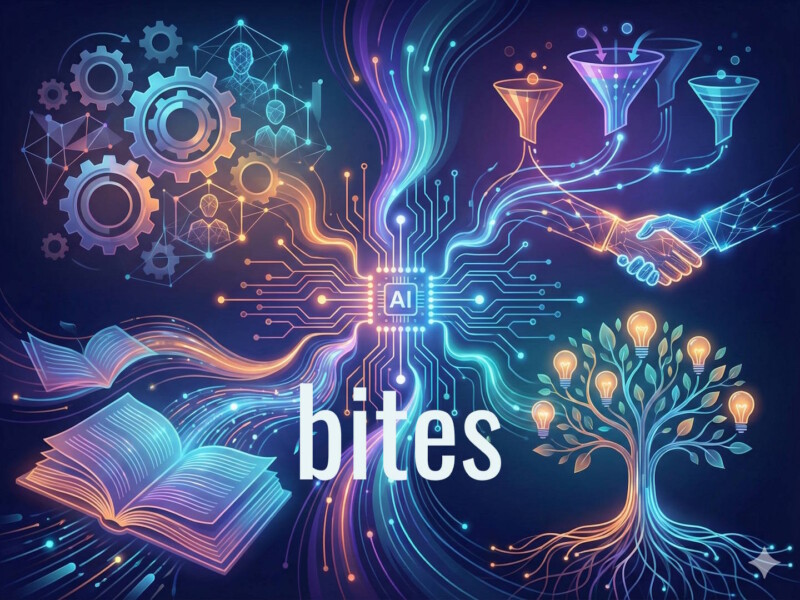
Featured image (top of post)
In what way is artificial intelligence (AI) changing the way you work, hire, learn, or teach? A Gemini-generated image. “GT” added the word “bites”.