Digital nomadism: the perfect life?

Is the digital nomad lifestyle the perfect, boundary-breaking existence it appears to be on social media? Or does the freedom to live as a ‘citizen of the world’ mask a deeper dislocation?
Jim Butcher examines the cultural and political trade-offs of hypermobility, and questions what is lost when we walk away from the concepts of community, citizenship, and ‘home’.
It’s a “Good Tourism” Insight. (You too can write a “GT” Insight.)
Just a perfect day
“Just a perfect day, you made me forget myself”
_ Lou Reed
The novel Perfection by Vincenzo Latronico features Anna and Tom, digital freelancers working remotely who have moved to Berlin in search of their perfect life. No mention is made of ‘home’. Their life — food, art, and politics — seems almost curated, and is portrayed to the world via social media, on one occasion to attract subletters. Other expats come and go; footloose, like the protagonists.
Yet as Anna and Tom seek a cosmopolitan perfection, their lives come across as empty.
The sense throughout is that they are dislocated from the place in which they find themselves. The couple search for meaning through art, but remain alienated from the society that produced it. The novel speaks to an ennui accompanying the footloose search for lifestyle. That search — superficially exciting and boundary-breaking — can take the individual away from a connection with other people associated with ‘home’.
The perfect life simply does not feel authentic.
Perfection seems to parallel much of what has been written about digital nomads. The globe offers them an array of cultural choices through which to live their best life. Technology and remote working, given a push by the pandemic, enable this. Traditional boundaries between home and away, travel & tourism, and leisure and work are breached.
The freedom to travel is to be celebrated, yet the cosmopolitanism of the digital nomad betrays the crisis of meaning that Latronico’s novel describes. The freedom to eschew roots and home, and view the world as a lifestyle opportunity, is also a freedom from things that matter more.
Imagine no countries
“Imagine there’s no countries”
_ John Lennon
Digital nomads are footloose workers who locate in desirable towns and cities around the world to conduct their business. They are generally well-heeled, without family commitments, and possess skills and occupations that can be undertaken from anywhere with a good internet connection. These typically include marketing, web design, software development, and freelance creative work. Reasonable rents and the availability of visas help, too.
Former nomad Sean Busuttil points out that they often see themselves as ‘citizens of the world’. No doubt many nomads will be happy to contradict Donald Trump’s claim that there is no such thing. According to the main website for the nomad community, nomads.com, digital nomads are predominantly of a progressive outlook, with a good dash of libertarianism. Just 3% identify as conservative.
Nomads are generally from the wealthy middle classes, well-educated, and secular; spirituality features strongly, but not organised religion to any great degree. Flexible pastimes such as the gym and jogging take precedence over team sports or clubs.
Destinations are varied. In South America, Medellin and Mexico City have noted nomad populations. In Asia, Bangkok, Chiang Mai, Canggu, and Tokyo are favoured. In Europe, Lisbon, Barcelona, London, and Paris are popular, alongside Berlin. There are also many less well-known destinations favoured by adventurous nomads.
Tsugio Makimoto and David Manners coined the term in 1997 in their book of the same name. They predicted the growth of a transnational, hypermobile class of workers, freed by their laptops and the internet from the need to locate in a particular place to pursue their jobs and lives. They claim that identity and community are coming to revolve around transnational ‘tribes’ of like-minded people. These tribes, they argue, will eventually come to replace the nation in people’s allegiances.
Research on the phenomenon suggests that nomads value this sense of freedom. Home and nation are seen as limiting to the cultural ambition of the individual as they build a life of their own. An academic study by Päivi Kannisto quotes a digital nomad named Jeff:
“When someone becomes a traveller they slowly come to realise that nationality no longer matters, much like blood type or other trivial things we are born with yet have no control over. My home country has never been defined, except by passport. Norway, Canada, America? For me, I would be unable to give a home country if someone were to ask for it. Those terms simply don’t register as comfortable for me.”
Nationality is sometimes interpreted as morally restrictive. Some distance themselves from the consumerism they associate with life back home. Tor, another respondent in the study, claimed: “My sense of values is very different from most Americans today. I’m a very non-materialistic person; I don’t buy things.”
Where’s home?
“Wherever I lay my hat, that’s my home”
_ Marvin Gaye
Digital nomads do not just work away from their nation; they work away from their home. Home has long been seen as a haven in a heartless world; a place of succour and shelter from the stresses associated with work or public life. It is also associated with identity; a hometown or home nation have historically been assumed to be key aspects of identity.
For some who are disillusioned with their societies, global nomadism provides a literal and metaphorical distance from their nation and fellow citizens. The UK Brexit vote and the election of Donald Trump are reputed to have prompted some to adopt the digital nomadic life.
For the nomad, the concept of home is limiting and disempowering. Päivi Kannisto quotes Andy: “I don’t need to return to a home nest like tourists who have nothing else to think about than how to get back.”
‘Homelessness’ — a term normally associated with poverty or being cut adrift from society — liberates global nomads to explore the world with cosmopolitan ease. “I don’t feel like I really have a home per se,” states another respondent.
To be a nomadic ‘citizen of the world’ implies a rare freedom. This freedom seems to be a freedom from the boundaries and limits imposed by national citizenship and home. The nomad has, apparently, transcended these limits and lives beyond them. But in doing so, they leave behind their capacity to shape a society, along with others, through a political process within the nation. They leave behind a community, a shared history, and a ‘home’.
The place I belong
“Country roads, take me home to the place I belong”
_ John Denver
Political philosopher Hannah Arendt argued that civic republican citizenship, through which people could collectively shape their society and community, marked a deep human freedom; the freedom to make a difference to our world in tandem with fellow citizens. The ‘freedom’ to cultivate one’s lifestyle in exciting cultural destinations pales in comparison.
Civic values of community, loyalty, and trust operate on the basis of a ‘home’. It is at home — community, region, and nation — that shared values, assumptions, struggles, and a shared history make authentic communities possible, rather than transient ones based on lifestyle preference.
The loss of the political freedom to be fully part of a national democracy, and of the civic freedom to be part of a community, is the price paid for the freedom to live footloose, outside of the expectations, obligations, and possibilities of home and citizenship.
The German Romanticist Johann Wolfgang von Goethe wrote of the importance of ‘roots and wings’ in life. The rise of the digital nomad, and the sentiment surrounding it, suggests some have lost sight of the former.
Perhaps we need to belong somewhere in order to explore elsewhere.
What do you think?
Share your thoughts in a comment below about digital nomadism. Are you a digital nomad? Do you host them? All perspectives are welcome because travel & tourism is everyone’s business.
(SIGN IN or REGISTER first. After signing in you will need to refresh this page to see the comments section.)
Or write a “GT” Insight or “GT” Insight Bite of your own. The “Good Tourism” Blog welcomes diversity of opinion and perspective about travel & tourism, because travel & tourism is complicated.
“GT” doesn’t judge. “GT” publishes. “GT” is where free thought travels.
If you think the tourism media landscape is better with “GT” in it, then please consider supporting “GT” via a Partnership and/or …
About the author
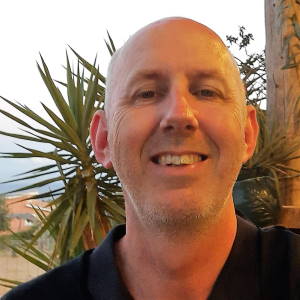
Jim Butcher is a lecturer, and a writer of a number of books on the sociology and politics of tourism. Dr Butcher blogs at Politics of Tourism, tweets at @jimbutcher2, and is the founder of Tourism’s Horizon: Travel for the Millions.
Featured image (top of post)
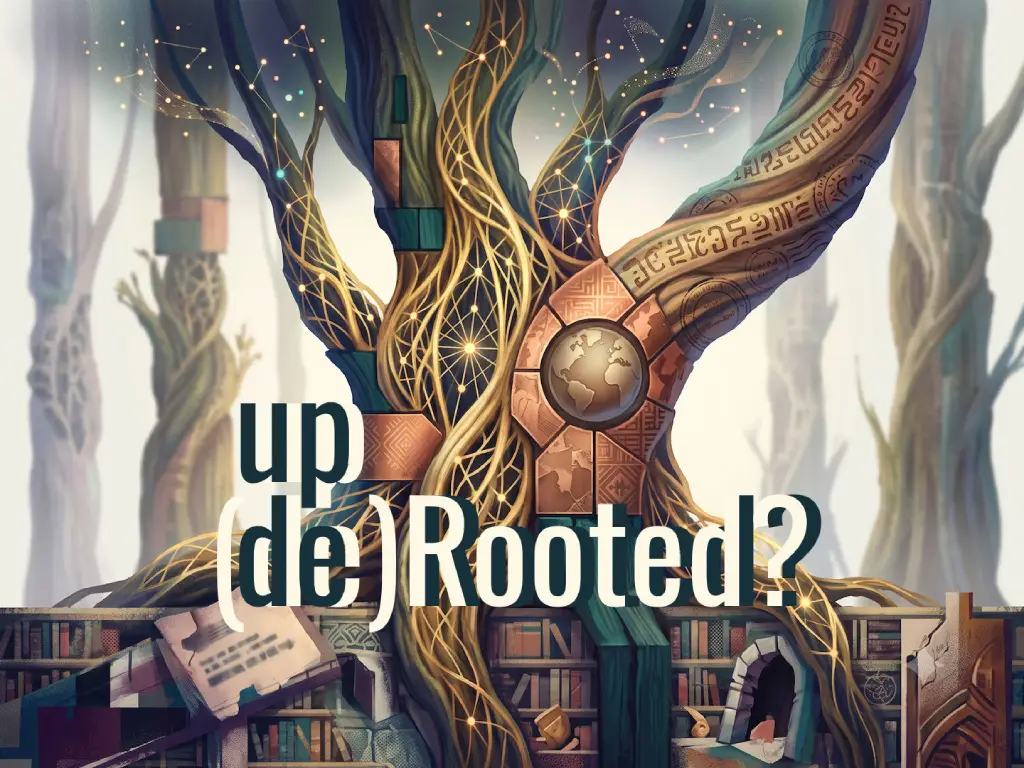
Does digital nomadism represent the perfect life, or de-root nomads leaving them bereft of ‘home’? A Gemini-generated image.