Imagining peace: How travel writing bridges divides between Israel and the UAE

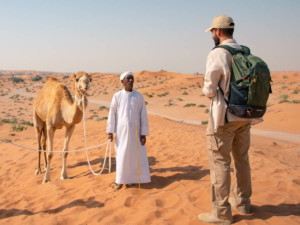
Following the 2020 Abraham Accords, the United Arab Emirates (UAE) transformed from a distant adversary to a popular holiday destination for Israelis. From virtually zero visitors prior to the Accords, Israel surged to become Dubai’s eighth-largest source market for tourism by early 2023.
Dr Irit Shmuel and Prof Paolo Mura analyse how travel narratives are helping to bridge the cultural divide. Thanks to “Good Tourism” Insight Partner Tourism’s Horizon: Travel for the Millions for inviting them to share this “GT” Insight.
Tourism and the production of meaning
Travel does more than move people across borders. Ideas, images, and narratives shape how places and people are imagined long before any journey begins.
Through stories and everyday travel writing, destinations are framed as familiar or foreign, welcoming or threatening, possible or impossible. In this sense, tourism is not only about movement in space, but also about the production of meaning.
This dynamic became especially visible in the relationship between Israel and the United Arab Emirates (UAE) following the diplomatic agreements between the countries known as the Abraham Accords.
For many Israelis, the UAE had long been a distant and largely unfamiliar Muslim country. In a study published in 2024 in the Journal of Travel Research, we examined how tourism discourse contributed to reshaping the way the UAE was imagined in Israel in the years that followed the agreements.
From diplomacy to everyday travel
Signed in September 2020, the Abraham Accords normalised relations between Israel and several Arab states, including the UAE. Beyond their diplomatic importance, the agreements opened the door to civilian mobility, trade, and tourism.
Governments introduced direct flights, eased travel restrictions, and the UAE quickly emerged as a new destination for Israeli travellers.
Travel numbers increased rapidly. From virtually no Israeli visitors before 2020, visits rose to hundreds of thousands each year in the period that followed. Alongside this growth in mobility came a notable expansion in tourism press coverage.
Travel sections, lifestyle magazines, and digital platforms began publishing extensive content about Dubai, Abu Dhabi, and the Emirates more broadly. For many, this was the first sustained exposure to the UAE as a place that could be visited, experienced, and enjoyed.
Tourism writing as a cultural lens
Our study draws on an analysis of travel stories published in the Israeli press between 2020 and 2023. Rather than asking whether tourism produces peace in a political sense, our research focuses on how tourism language works culturally: The stories told, the images emphasised, and how these narratives shape the way a destination is imagined.
Central to the analysis is the idea of geographical imagination.
Most people form ideas about places they have never visited. Media, personal stories, films, and travel writing shape these ideas. Tourism articles in particular act as guides not only to places, but to expectations. They help readers imagine what a destination feels like, how people behave there, and whether they themselves might feel comfortable within it.
In the case of the UAE, tourism writing created a space in which Israeli readers could begin to imagine a Muslim country through everyday experiences rather than through conflict or geopolitics. Markets, hotels, museums, mosques, and streetscapes replaced the distant and abstract images that had previously dominated.
A model of how tourism shapes peace imaginaries
Our findings reveal a consistent pattern: Tourism discourse contributed to the construction of an emerging discourse of peace and tolerance.
This discourse did not erase political tensions or historical conflicts. Instead, it operated on a different level: the level of imagination and expectation.
The model developed in our research shows how this process unfolded. Tourism articles circulated narratives that shaped Israeli readers’ touristic imagination of the UAE. This imagination made it easier to envision future encounters with the country and its people in non-threatening terms.
Two discursive strategies were particularly central to this process:
- cosmopolitanism, and
- softening.
Cosmopolitanism and the language of familiarity
The tourism articles we examined in our research consistently framed the UAE as a global, modern, and outward-looking destination.
Dubai and Abu Dhabi were described through references to international architecture, luxury hotels, museums, mega-events, and global brands. Comparisons to cities such as New York, London, or Las Vegas positioned the UAE within a familiar world.
This framing mattered. By emphasising modernity and global culture, the UAE was presented not as an exotic or alien space, but as part of a shared international landscape. The destination appeared sophisticated and accessible rather than distant or culturally isolated.
Alongside this global framing, elements of familiarity played an important role. Articles highlighted kosher food options, Jewish community life, and the presence of synagogues. These details reduced perceived cultural distance and helped Israeli readers imagine themselves moving comfortably through the destination.
Softening cultural difference
Our research identifies a second strategy: softening.
This refers to the way in which potentially sensitive cultural and religious elements were represented. Features that might otherwise provoke unease among Israeli readers — such as mosques, Islamic prayer, the call of the muezzin, or dress codes — were framed as aesthetic, interesting, and enriching aspects of the travel experience.
Articles presented mosques as architectural highlights rather than as spaces marked by religious difference. The call to prayer was described as atmospheric and evocative, creating a sensory allure. Dress codes were explained calmly and pragmatically, often with reassurance that they were more relaxed for visitors.
Through this process, cultural difference was not denied but reframed. Instead of being portrayed as restrictive or threatening, it was presented as something to observe, appreciate, and engage with.
Peace at the level of imagination
Our study does not claim that tourism produces peace in a diplomatic or political sense. Rather, it highlights peace at the level of imagination.
Before people meet in reality, they meet in their minds. These imagined encounters shape emotions, expectations, and willingness to engage.
By reshaping how a destination is imagined, tourism discourse expands the range of possible relationships with it. In the case of Israel and the UAE, tourism writing helped create images of normality, curiosity, and openness alongside existing political narratives.
What did we learn from this study?
Our study shows that tourism writing plays an important role in shaping how unfamiliar places are imagined.
Rather than producing peace in a political sense, tourism discourse works at the level of everyday understanding. By presenting destinations through familiar scenes and manageable forms of difference, travel writing helps normalise the idea of contact and makes new encounters feel possible.
These shifts may be subtle, but they matter, because they shape expectations long before any journey begins.
What do you think?
Share your thoughts in a comment below about the role of travel writing in promoting peace, or simply in the success (or otherwise) of destinations.
(SIGN IN or REGISTER first. After signing in you will need to refresh this page to see the comments section.)
Or write a “GT” Insight or “GT” Insight Bite of your own. The “Good Tourism” Blog welcomes diversity of opinion and perspective about travel & tourism, because travel & tourism is everyone’s business.
“GT” doesn’t judge. “GT” publishes. “GT” is where free thought travels.
If you think the tourism media landscape is better with “GT” in it, then please …
About the authors
Dr Shmuel and Prof Mura co-authored “Tourism and Discourses of Peace About the UAE in the Israeli Media” which appeared in the Journal of Travel Research.
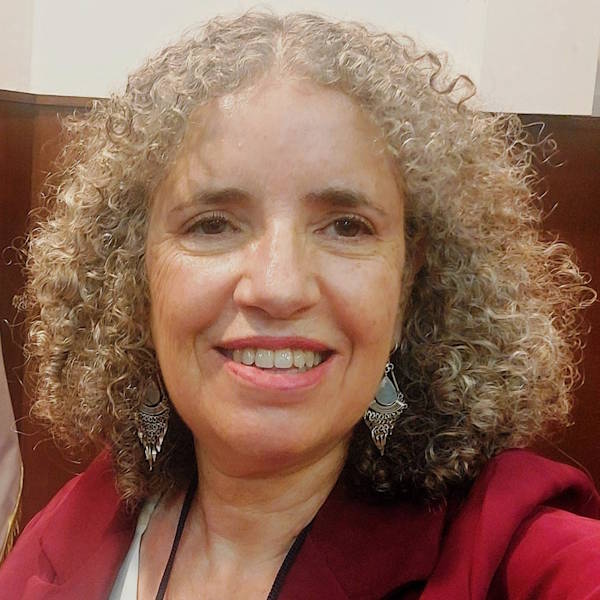
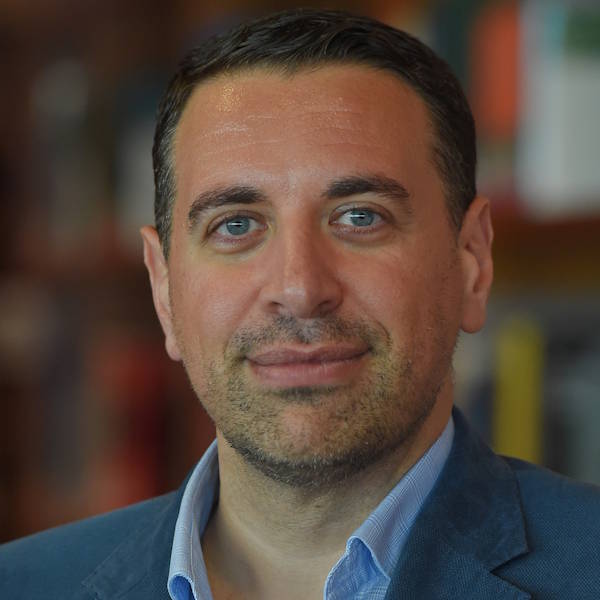
Irit Shmuel is a tourism researcher and lecturer at the Jerusalem Multidisciplinary College, Israel. She is also involved in several international research and teaching projects in collaboration with academic institutions worldwide.
Dr Shmuel holds a PhD in Geography with a specialisation in tourism. Her research focuses on tourism discourse, including travel writing, media representations, and tourist imaginaries, alongside the study of tourist skills. She also conducts research on rural and community-based tourism, paying particular attention to tourism planning and development.
Paolo Mura is a Professor at the College of Communication and Media Sciences, Zayed University, Abu Dhabi, UAE.
His research examines tourist experiences and representations, with a particular focus on gender, power in academia, travel subcultures, and artistic expressions. He takes a critical qualitative approach to his work.
Over the years, Prof Mura has gained extensive experience and conducted fieldwork across New Zealand, Australia, Greece, Malaysia, and the United Arab Emirates, bringing a comparative and international perspective to his studies.
Featured image (top of post)
Imagining peace: How travel writing bridges divides between Israel and the UAE. A Gemini-generated image. “GT” added the words.