What local tourism students know about Phuket that global sustainability leaders do not

Transitioning from an emerging hotspot to an established tourism-led economy is complex.
In this “Good Tourism” Insight, Ken Drew examines the growing pains of Phuket, Thailand where locals, including his former tourism students, too often find themselves in danger.
Has rapid development outpaced basic infrastructure? And has it compromised the island’s ability to safely handle monsoonal rains?
Following last week’s Global Sustainable Tourism Council conference on the island — planned amid reports of deadly landslides, toxic fires, and poor air quality — a question arises:
Should the GSTC demand stricter adherence to its own criteria before selecting a host destination? Or is it right to persist with the softer policy of engagement?
Welcome to the 2026 Global Sustainable Tourism Conference
If you were a delegate at the 2026 Global Sustainable Tourism Conference last week, you arrived at the Royal Phuket City Hotel, a venue that was very recently smothered in black smoke.
That was bound to happen. In 2025, Reuters investigated Phuket’s infamous plastic waste crisis by interviewing someone who lives next to it. Vassana Toyou’s million-dollar view of green mountains had been spoiled by a wall of nauseating grey trash that has forced her into a kind of lockdown.
“There is no life outside the house, (we) just stay at home,” she said. “The smell is very strong, you have to wear a mask.”
On April 11, 1.2 million tonnes of trash at that landfill caught fire and burned for 30 hours. Phuket’s municipal waste collection was suspended for a week but resumed a few days before you arrived for your sustainable tourism event and learned about “Resilient Cities & Communities”.
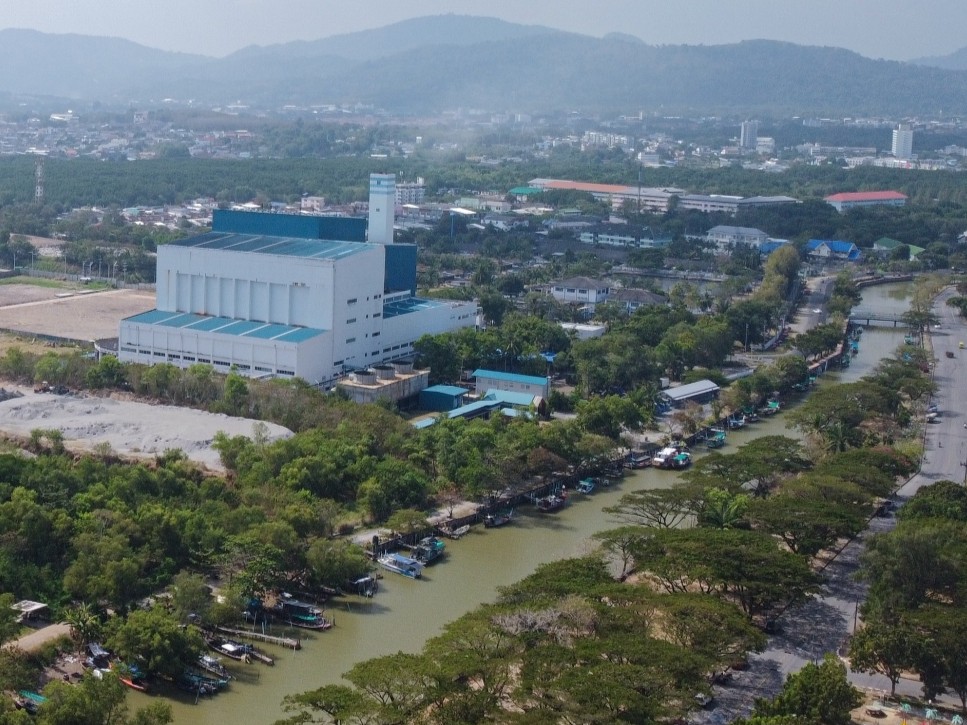
The waste site includes five landfills and an incinerator built atop a mangrove forest. The incinerator allegedly leaks cancer-causing dioxins. Downwind of it is Old Town; a 2.7‑square-kilometre tourism zone that houses the Royal Phuket City Hotel. Authorities have announced Old Town will be carbon-neutral by 2030.
This is a story of how decades of tourism-led development have shaped life in Phuket. I will tell it through the lens of my previous work as a “tourism English” teacher on the island, and via my messages with students. And I will measure it against the Global Sustainable Tourism Council (GSTC) Destination Standard.
Welcome to Phuket, Thailand
I first visited Thailand in 2013. It was nice back then. The hills were green. The roads were slow. You could take your eyes off the road for a second to admire the surroundings.
Like many delegates at the GSTC event, I arrived in Phuket expecting something closer to the lush, tropical, and biodiverse Costa Rica. That is what the brochures and social media show, but that’s not Phuket when you zoom out.
I struggled to live there when I taught at a local university. I biked to campus every day. The last kilometre was the hardest. Soi Samkong is a skinny six-metre-wide strip with two-way vehicular traffic. Double-decker tour buses muscle their way into the street. It’s the only route to the Athena Cabaret Show.
Residents along the road blockade the sidewalk with barriers of orange cones and broken chunks of concrete to push students on motorbikes back into traffic.
Built for mass tourism, not for people
Picture Disneyland. One main entrance. Wide walkways fanning out toward each attraction. Every path is designed to move the maximum number of people to the maximum number of places where they will spend money. You go where the park wants you to go.
Phuket works the same way. The airport is the entrance. Two highways pour south from it. An hour later you arrive at a beach, Old Town, your hotel, or a pier. You spend money. You get back in a vehicle. You leave. More arrivals equal more revenue.
The amusement park destination layout works as it was designed, but there are consequences when you build for tourists and not for locals.
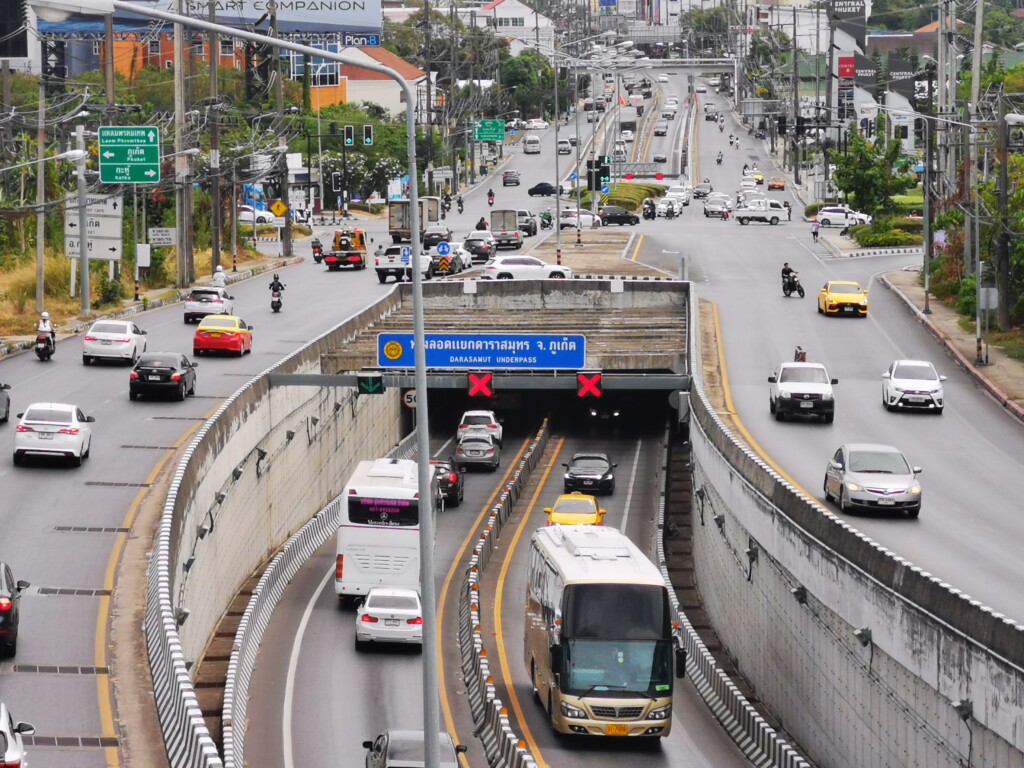
On those highways, vehicles race and overtake each other at well over 100 kph. Cars. Trucks. Minivans. Double-decker tourist buses. And threading between all of them, on motorbikes and scooters, tourists, migrant workers, low-income locals, and my students.
My first hit-and-run (as a victim) in my 14 years living in Thailand happened in Phuket. I was lucky.
According to the Thailand Road Accidents Data Centre (ThaiRSC), Phuket recorded 114 deaths and 27,502 injuries from road accidents in 2025. That is approximately 27 deaths per 100,000 residents, four times higher than major cities such as Los Angeles.
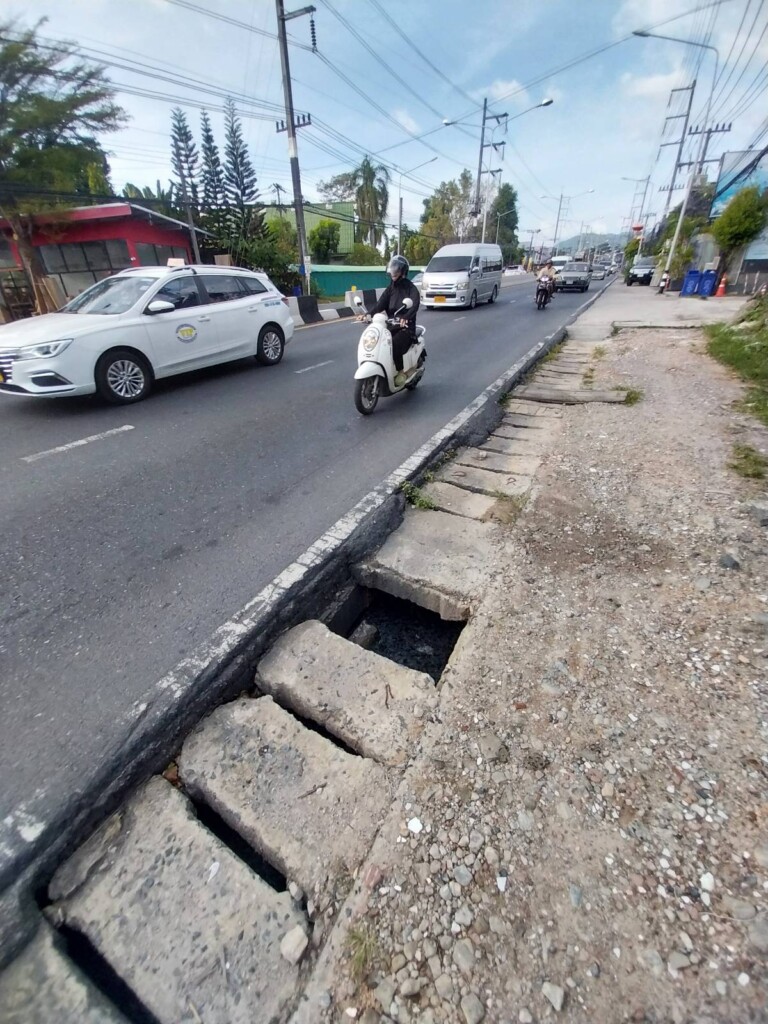
These conditions are a direct outcome of long-term infrastructure planning prioritising mass tourism over local mobility and safety.
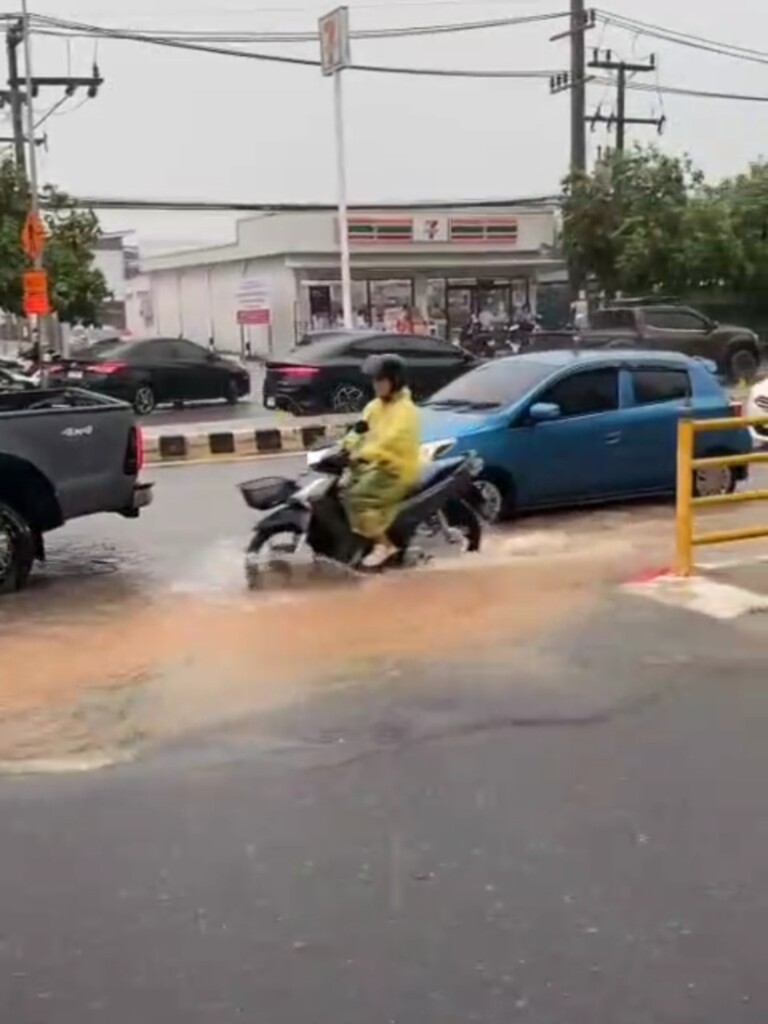
And it affects people daily, especially when it rains.
On July 31, 2025, my student Non sent a message with a photo of his flooded street.

“It’s raining very heavily, teacher,” he wrote in our LINE group.
He turned his question urgently to the group. “Excuse me, do you know if the professor will be teaching this period?”
Every student chose to stay home that rainy day.
In a survey I gave the previous year, 81% of students said they could not safely travel to school during heavy rain due to flooding or road conditions.
Phuket experiences seasonal monsoon rainfall, but infrastructure has not adapted to rapid urbanisation and runoff.

Deadly deforestation and the blame game
On August 23, 2024, four months after Phuket was selected to host the 2026 GSTC conference, a landslide killed 13 people and injured 19 others, destroying 209 households across nine villages.
Colonel Dusit Kaesonkaew alleged that construction and deforestation at the Big Buddha site, beginning in 2005, had blocked natural waterways.
The Royal Forestry Department confirmed that trees on Nakkerd Hill had been felled to make way for the complex. Blame was assigned to the foundation that built the statue, rather than those who approved permits for constructing it.
Phuket has a long history of deforestation. Researchers at Thammasat University in Bangkok unearthed startling data:
- Phuket’s urban area expanded from 51.2 km² in 1987 to 345.6 km² in 2024.
- Forest cover dropped consistently from 138.2 km² to 109.9 km².
- Mangrove cover shrank from 33.7 km² to 23.6 km².
- The average annual urban growth rate was 6.65%, with peak years hitting 88%.
Phuket is no longer in an early development phase. By 2024, the island’s urban area had reached 345.6 km², just under half the land area of Singapore and roughly equivalent to about three Parises combined.
Between 1987 and 2024, Phuket’s urban area expanded at an average rate of approximately 6.7% per year, consistent with rapid urban growth patterns associated with boomtown development rather than incremental coastal tourism expansion. This expansion has coincided with recurring flooding challenges during the monsoon season, particularly in urban and rapidly developed areas of the island that even now continue to expand.
Phuket doubles down on deforestation at Bang Khanun Hill
In January 2025, five months after the landslide, Phuket Governor Sophon Suwannarat had enough of local environmentalists complaining about encroachment at Bang Khanun Protected Forest.
How the issue was resolved highlights how Thai authorities continue to shift away from conservation towards rezoning and development, during the Phuket’s real estate boom.
Bang Khanun is a 3,700-rai (592-hectare) forest-covered hill overlooking Phuket International Airport. It is crucial for absorbing heavy rains. Activists warn that deforestation on it has already contributed to flooding risks in the airport area. No forest means no flood protection for the airport.
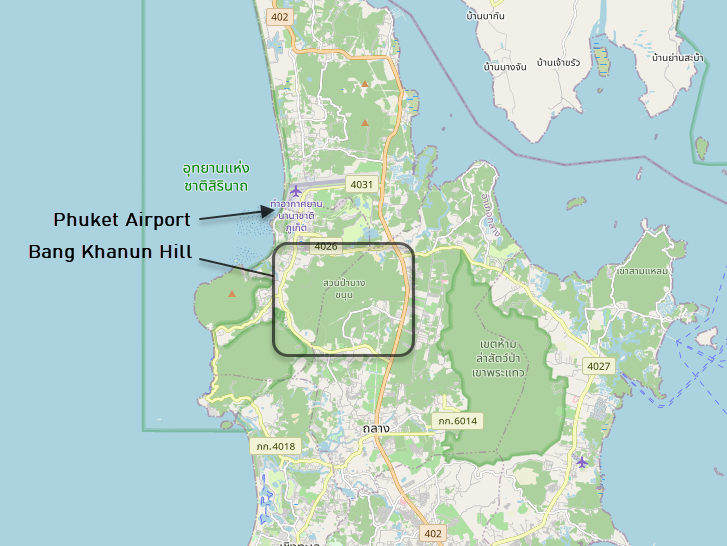
Rather than prioritising strict protection, authorities are moving to rezone the land. Only about 1,000 rai (160 hectares) would remain designated as watershed conservation forest, a fraction of the original area. That represents about 27% of the reserve, meaning more than 70% of the forest would be rezoned for government and military use, housing, or development-related purposes.
When sustainable tourism leaders meet, do they clear the air?
The Global Sustainable Tourism Council (GSTC) has highlighted a range of measures designed to reduce the environmental impact of its 2026 conference:
- The carbon footprint of the event was calculated and offset;
- Polystyrene foam was avoided;
- Name badges used no plastic;
- Reusable lanyards with minimal design were distributed; and
- Electric shuttle buses were used for airport and event transportation.
I am very impressed by that, and the people behind it deserve credit. But that success makes one question unavoidable: Why was a sustainable tourism conference held in a destination that so visibly struggles to meet those same standards?
If Phuket applied the same level of commitment island-wide, it could rival places like Costa Rica, Singapore, or San Francisco.
While delegates moved between venues in emissions-free electric buses, they were also exposed to three cigarettes worth of air pollution during the four-day conference. Air quality in Phuket regularly fails WHO standards, and Thailand frequently experiences some of the worst pollution levels in the world during peak periods due to open burning and weak environmental laws.
I have personal experience with this. Air pollution in Thailand forced me to resign from Ayutthaya Rajabhat University in 2023 and Phuket Rajabhat University in late 2025.
I experienced heartbeat irregularities, asthma, and loss of muscular control in my legs, among other serious symptoms. Despite a background as an elite athlete, prolonged exposure to PM2.5 between 2012 and 2023 caused lasting health damage. In 2023, I was one of 10 million people hospitalised.
So, while the GSTC event has demonstrated what sustainable tourism can look like in practice, in its chosen host destination, tourism continues to be promoted as a key economic driver despite ongoing air pollution that affects residents, expatriates, and visitors alike.
Inside the GSTC, sustainability works as intended
After delegates were transported in air-conditioned electric shuttles, they attended sessions in which they learned from renowned speakers about resilient cities and communities, and how destinations can navigate the balance of growth and livability.
The Tourism Authority of Thailand (TAT) Governor Thapanee Kiatphaibool boasted about her department’s commitment to sustainability:
“Hosting the Global Sustainable Tourism Conference 2026 in Phuket marks a significant milestone for Thailand as we continue our journey toward becoming a leading sustainable tourism destination on the global stage.
This conference reflects our strong commitment to driving tourism development based on the principle of ‘value over volume,’ while ensuring a balanced approach to visitor management and resource preservation.”
Outside the GSTC, sustainability is more complicated
Outside the conference, these policy ambitions sit within a broader governance structure.
Eight months prior, Thaneth Tantipiriyakij, the President of the Phuket Tourist Association spoke plainly about the lack of support. In Thailand, development in destinations such as Phuket is shaped by national tourism and infrastructure policy, which establishes the framework within which local implementation takes place.
“If we could only choose one urgent improvement [for Phuket], it would be the roads,” he said. “Tourism must consider the quality of life for local residents. Traffic congestion adds daily burdens to their lives and it affects travellers’ experience. We want the government to address this.”
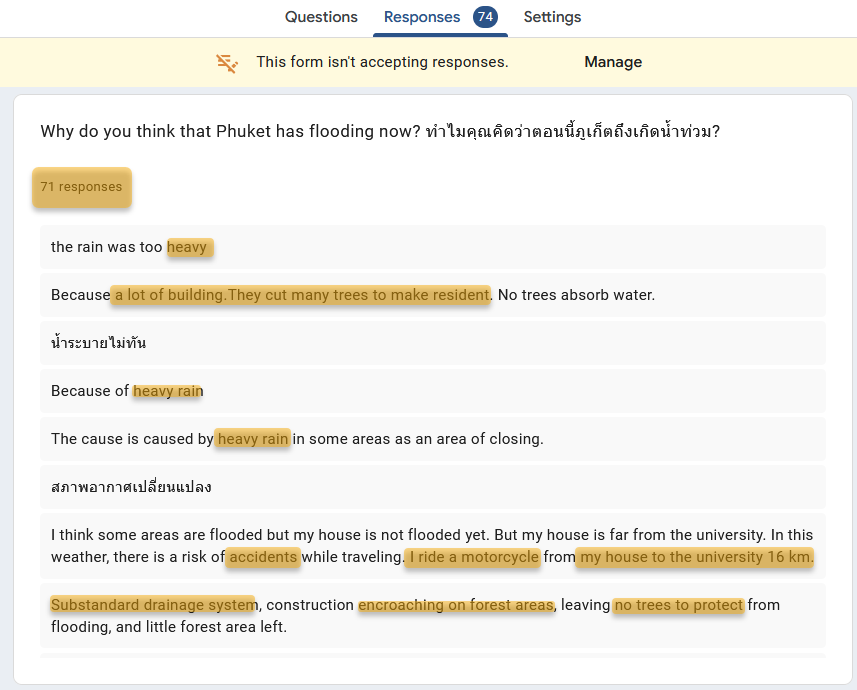
My former students would agree. During the monsoon season, I gave them a road safety survey to see if I should teach online or not. Some 49% reported flooding at or near their Phuket homes. One student described his 16 km motorbike commute: “My house is far… in this weather, there’s a risk of accidents.”
So, while I applaud GSTC for shuttling its delegates around in EV buses, I can’t help thinking that my students could have been riding the Phuket Island Light Rail Transit (LRT) by now if the authorities had committed to reinvest just a fraction of the island’s tourism revenues.
The LRT was estimated to cost US$1.1 billion in 2019. Between January and July 2025 alone, some 7.6 million tourists visited the island, generating about $8.9 billion in revenue.
The gap between sustainability standards and reality
The Global Sustainable Tourism Council (GSTC) promotes its GSTC Destination Standard as a global benchmark for managing tourism’s environmental and social risks, including planning for crises and engaging local stakeholders.
The GSTC Destination Criteria (v2.0 2019) include core requirements for sustainable destination management. Three that stand out include:
Planning regulations and development control (Criterion A9)
- Development on forested hills, including deforestation linked to the deadly Nakkerd Hill landslide and subsequent rezoning of Bang Khanun Hill, raises questions about whether land use is being properly controlled to prevent environmental harm.
Risk and crisis management (Criterion A11)
- Flooding, landslides, and the landfill fire all point to recurring, foreseeable risks that affect daily life for residents and were not effectively mitigated.
Solid waste management (Criterion D9)
- The large-scale landfill fire, suspension of waste collection, and proximity of waste infrastructure to populated and tourism areas highlight systemic challenges in managing waste sustainably. During my three years, I never saw any plastic or e‑waste recycling. No city-wide banning of single-use plastics either.
Despite all this, Phuket was selected to host this conference in April 2024. The Thailand Convention and Exhibition Bureau (TCEB) called it “a great victory for Thailand” and projected 50 million baht (approximately USD 1.4 million) in MICE revenue.
Four months later, a deforestation-linked landslide killed 13 people.
Five months after that, the governor was reviewing plans to ‘develop’ another protected forest on another mountain.
The question nobody is asking
The GSTC’s own criteria exist for a reason. The GSTC exists for a reason. If the GSTC rewards unsustainable destinations with revenue-boosting conferences that give authorities in those destinations the ability to greenwash, then how can ‘good tourism’ ever scale globally to uplift communities, preserve cultures, and protect nature?
My Thai travel & tourism students are waiting for an answer to that every time it rains.
What do you think?
Share your thoughts in a comment below about sustainable tourism standards and criteria, especially if you are a representative of GSTC, Thailand, Phuket, or affected stakeholders. All perspectives are welcome because travel & tourism is everyone’s business.
(SIGN IN or REGISTER first. After signing in you will need to refresh this page to see the comments section.)
Or write a “GT” Insight or “GT” Insight Bite of your own. The “Good Tourism” Blog welcomes diversity of opinion and perspective about travel & tourism, because travel & tourism is complicated.
“GT” doesn’t judge. “GT” publishes. “GT” is where free thought travels.
If you think the tourism media landscape is better with “GT” in it, then please consider supporting “GT” via a Partnership and/or …
About the author

Ken Drew is a California-based sustainable tourism writer and content strategist with more than a decade of firsthand experience in Southeast Asia.
As a former senior editor at a European sustainable travel publication, Mr Drew produced destination blogs, traveller guides, and investigative features covering greenwashing, landscape conservation, and the human cost of unchecked tourism development.
He also taught Tourism English and led SDG workshops at Phuket Rajabhat University.
For several years, in Ayutthaya, Ken led free (no tips) bicycle tours through the UNESCO World Heritage Park, funneling curious backpackers directly into the local community.
“Guiding travellers to unique experiences is why I help operators, hotels, and destinations communicate their green commitments to those who are looking for them.”
Featured image (top of post)
Indeed, what do local tourism students know about sustainability in Phuket that global sustainability leaders do not? A Gemini-generated image. “GT” added the words.