Is accessibility critical to sustainable tourism?

Accessible tourism advocate Neha Arora asks the travel & tourism industry to factor in the needs of the elderly and people with disabilities when designing sustainable destinations and responsible products.
According to the UNWTO website, the definition of sustainable travel is: “Tourism that takes full account of its current and future economic, social and environmental impacts, addressing the needs of visitors, the industry, the environment and host communities.”
Yes, we are experiencing major climatic and environmental change globally. Travel & tourism, like a two-faced coin, is one of the leading causes of it and one of the sectors most impacted by it. We are also experiencing major attitudinal changes in communities impacted by over-tourism. And, as tourism grows for better or for worse, our carbon footprint is also increasing by the exponential increase in the number of flights being taken by travellers.
Thus most of us agree that there must be a greater global awareness of sustainable and responsible travel & tourism, with the view to: reducing our carbon footprint, cutting out single-use plastics, caring for host communities, engaging in fair-value trade, and mitigating our impact on destinations’ ecosystems etc.
Notwithstanding all those imperatives, we ignore major segments of society by assuming that they do not want to travel. Seldom do we talk about those who wish to travel like everyone else but are unable to do so. This segment accounts for 15% of the world population. When you include their friends and family members, this increases to almost 25%.
I am of course talking about people with disabilities and the elderly. The reason they do not travel is not that they do not want to but because of the inaccessibility of many destinations, the lack of information about destinations that are accessible, societal stigma, and fear of the unknown.
And I am saying this from my personal experience. I could never travel as a child because both my parents are persons with disabilities. My father is blind and my mother is a wheelchair user. The inaccessibility of the built environment and the unwelcoming attitude of destinations were the primary reasons for us not travelling at all.
We grew up hoping things would change for the better, but we were disappointed. A series of not-so-good travel experiences with my parents led me to look for solutions. Unfortunately, I could not find any, which made me wonder what people like us do. Well, either they were not travelling at all, or were facing similar not-so-good travel moments. This realisation hit me hard and got me thinking about solutions for my family and the 25% of the world population experiencing similar frustrations.
I left my corporate career to set up Planet Abled, a travel company for all. Our challenge is to deliver responsible, sustainable, AND accessible travel experiences to our customers. In addition to our concern about host communities and the environment, we consider deeply how a person with a disability or an elderly person can travel to and experience destinations as others do.
Are destinations and travel services we partner with similarly concerned about all these matters? In addition to their demonstrable sense of responsibility and desire for sustainability, are they addressing the need for accessibility and inclusion? Are they barrier-free for every type of traveller? Are both the tangible and intangible barriers being removed?
Can destinations and travel services really be called sustainable when they exclude nearly a quarter of the world’s population?
Are we as an industry thinking that we must first make destinations sustainable and then retrofit them to make them barrier-free? Who is ready to bear the cost of retrofitting?
Isn’t it a better idea to include universal design in destinations and products right from the start, thereby making tourism truly sustainable?
I leave you with these questions to ponder upon!
And if you can’t find the right answers to the what, why, and how of inclusive travel, I am happy to answer them.
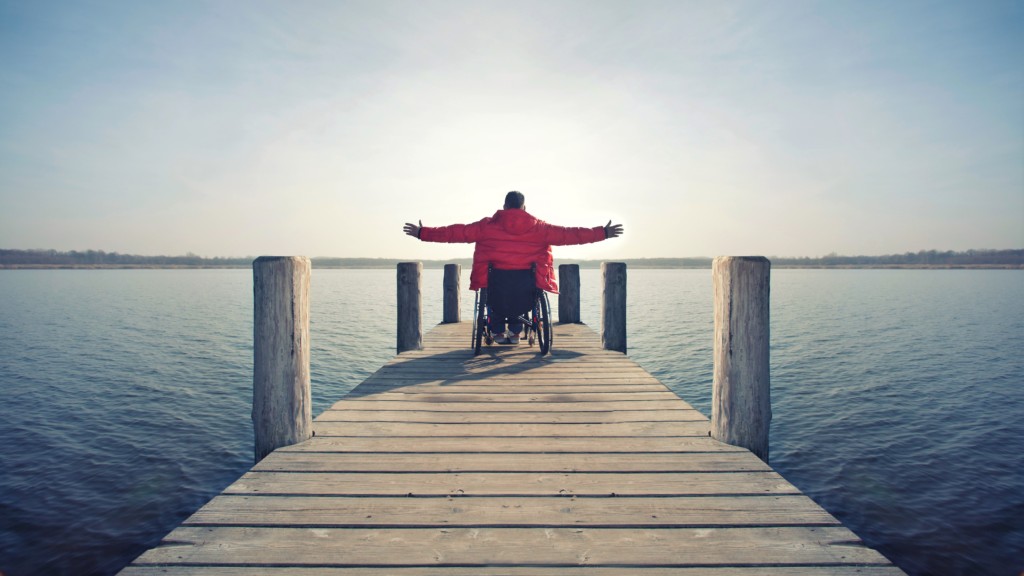
Featured image: UNWTO’s World Tourism Day in 2016 was themed “Tourism For All: Promoting Universal Accessibility”. This image was widely used as part of that campaign.
About the author

Neha Arora is the founder of Planet Abled, an organisation that provides accessible and inclusive travel solutions for people with diverse disabilities. Before taking the plunge to start Planet Abled, Neha worked with companies like HCL, Nokia, and Adobe in various managerial roles.
A Global Good Fund fellow and a TEDx speaker, Neha regularly delivers workshops about the seamless integration of people with disabilities into mainstream society as well as social entrepreneurship.