From conservation to regeneration: APE Malaysia’s decade of purpose-driven tourism

At APE Malaysia (Animal Projects & Environmental Education), our work sits at the intersection of wildlife conservation, ecosystem restoration, and responsible tourism.
From the outside, our programmes may appear diverse; structured volunteer programmes, wildlife enrichment, reforestation, environmental education, and community engagement.
From the inside, they are tightly connected by one guiding principle: tourism must contribute to ecological recovery rather than accelerate environmental loss.
Over the past decade, APE Malaysia has developed and refined a conservation tourism model that delivers tangible benefits for wildlife, habitats, and local communities.
To date, this work has engaged more than 2,000 volunteers, supported dozens of community partners, and contributed to measurable ecological outcomes.
This approach is increasingly relevant as destinations across Southeast Asia confront environmental limits and reassess the role tourism can play; either as a driver of degradation or as a catalyst for regeneration.
Rehabilitation is only the first step
APE Malaysia’s involvement in wildlife conservation began through partnerships with zoological institutions and rehabilitation centres.
One lesson has been consistent across all collaborations: rescued animals cannot simply be released back into the forest without the skills required to survive independently.
Habitat loss, human-wildlife conflict, and time spent in captivity often interrupt the development of essential natural behaviours.
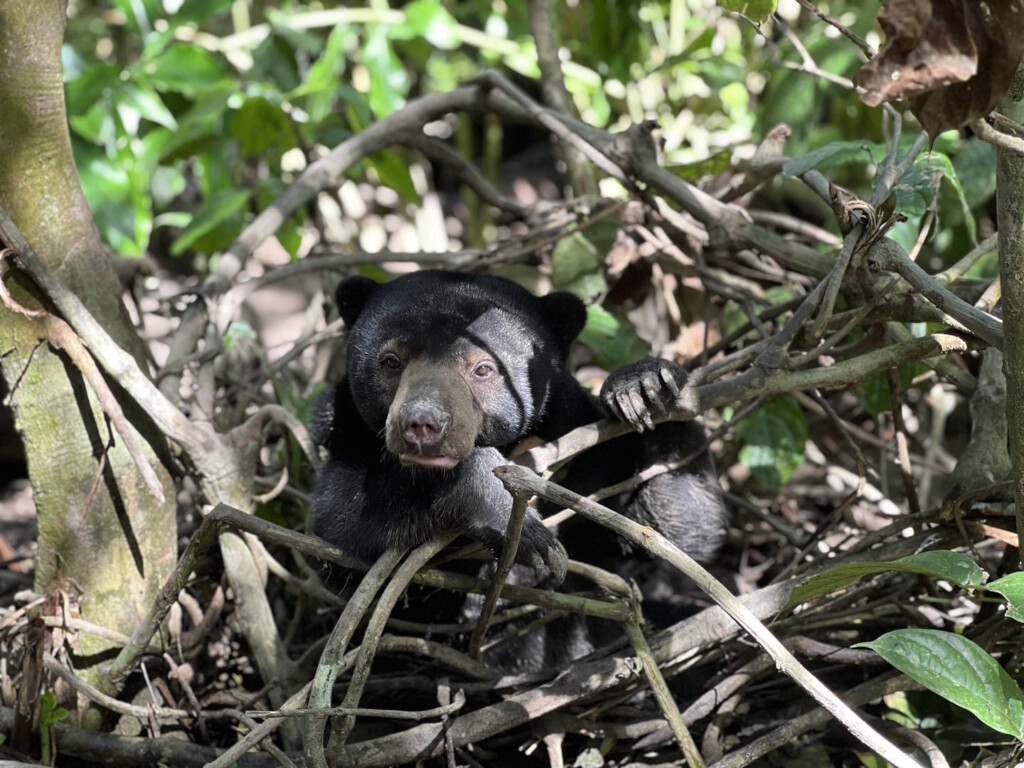
In partnership with the Bornean Sun Bear Conservation Centre in Sabah, APE Malaysia supports rehabilitation efforts that focus on strengthening physical, sensory, and behavioural capabilities prior to release.
Enrichment tools are carefully designed to encourage foraging, climbing, problem-solving, and nest-building — behaviours that directly influence post-release survival.
Since the programme began, volunteers and staff have collectively produced thousands of enrichment items for more than 50 sun bears, each designed to simulate natural challenges animals will face in the wild.
These tools are not intended for display or entertainment, but as functional components of a structured rehabilitation process guided by animal care professionals.
Volunteer tourism plays a carefully managed role in this work.
Volunteers contribute by constructing enrichment devices under the centre’s strict guidelines and professional supervision. There is no direct contact with animals and no performative element. The value lies in practical support for animal welfare and rehabilitation outcomes, not in spectacle.
This approach reflects a broader shift in wildlife tourism: moving away from passive observation or interaction, and towards purpose-driven participation aligned with conservation science and ethical standards.
Without forests, there is no future for wildlife
Wildlife rehabilitation cannot succeed in isolation. Orangutans, sun bears, and countless other species ultimately depend on intact and connected forest landscapes.
Recognising this, APE Malaysia expanded its work into habitat restoration through the Restore Our Amazing Rainforest (ROAR) initiative.
ROAR focuses on reforesting degraded land, particularly in wildlife corridors and buffer zones where forest loss has weakened ecosystem resilience.
To date, the initiative has supported the planting of over 94,000 trees, using site-appropriate native species selected to strengthen soil health, improve water retention, and restore habitat connectivity.
Tree planting is followed by long-term maintenance, monitoring, and biodiversity assessments. The objective is not simply to increase tree numbers, but to restore ecological function and resilience over time.
Tourism participants, schools, corporate teams, and community members are engaged throughout this process.
Importantly, APE Malaysia emphasises continuity: returning to planting sites, tracking survival rates, and adapting restoration strategies based on outcomes.
This long-term commitment distinguishes genuine restoration from one-off environmental activities and ensures accountability over time.
Community partnership as a conservation requirement
One of the most important lessons from our work is that conservation outcomes are inseparable from community well-being.
Many of the landscapes targeted for restoration are also home to communities whose livelihoods depend directly on natural resources.
APE Malaysia works with local and indigenous communities to ensure conservation initiatives deliver shared benefits.
To date, 64 local families have been directly involved in planting, nursery management, and site maintenance, alongside training and environmental education initiatives.
Rather than positioning conservation as a restriction on land use or livelihoods, the aim is to build co-ownership of restored landscapes.
When communities see forests as sources of long-term stability — supporting water security, climate regulation, and income — conservation becomes embedded.
This approach reflects broader trends in regenerative tourism, where social resilience is increasingly recognised as a prerequisite for environmental resilience.
Engaging tourism and corporate partners with integrity
As sustainability expectations rise across the tourism industry, many organisations are seeking credible ways to demonstrate environmental responsibility.
APE Malaysia provides a structured, field-tested platform for meaningful engagement, grounded in local context and long-term conservation needs.
Since its inception, APE Malaysia’s programmes have engaged 2,051 volunteers through reforestation activities, conservation volunteering, and environmental education.
These engagements are designed not as marketing exercises, but as contributions to ongoing ecological work with clearly defined roles and outcomes.
For many participants, the experience reshapes how they understand sustainability. Seeing the effort required to restore a forest, or learning how enrichment improves animal welfare, often leads to a deeper appreciation of environmental limits and long-term responsibility.
In this way, conservation tourism becomes not only a funding mechanism, but also an educational and behavioural one.
Tourism as a tool for regeneration
Across Southeast Asia, destinations are grappling with the consequences of unchecked development: biodiversity loss, water stress, and declining ecosystem services.
Tourism can either intensify these pressures or help address them.
APE Malaysia’s experience demonstrates that when tourism is intentionally designed, it can support rehabilitation, restoration, and community empowerment simultaneously.
The key lies in alignment: between visitor activities and conservation needs; between funding and long-term impact; and between environmental goals and social realities.
This model does not claim to be a complete solution. The scale of environmental degradation remains immense.
However, it offers a practical and replicable example of how tourism can transition from extractive to regenerative.
Looking ahead
The future of Malaysia’s biodiversity will depend on collective action.
Conservation organisations cannot succeed without supportive policies, engaged communities, responsible businesses, and informed travellers.
APE Malaysia continues to welcome collaboration with tourism operators, educators, funders, and partners who share a commitment to measurable impact and ethical practice.
The work ahead is complex and long-term, but the direction is clear.
Conservation today is no longer only about protecting what remains.
It is about actively restoring what has been lost — and ensuring tourism becomes part of that restoration rather than its cause.
Contact APE Malaysia
Animal Projects & Environmental Education Sdn Bhd (APE Malaysia) is an accredited social enterprise that develops programmes in support of conservation projects in a sustainable manner. Our programmes are designed to be embedded within partner project sites and aim to benefit the environment, wildlife, animals and community of the area through monitored and measured conservation outcomes.
Unit 1005, Lobby 2, Block A,
Damansara Intan,
47400 Petaling Jaya, Selangor, Malaysia
T: + 60 – (0)3 – 7724 2272 (Malaysia GMT +8hrs)
Featured image (top of post)
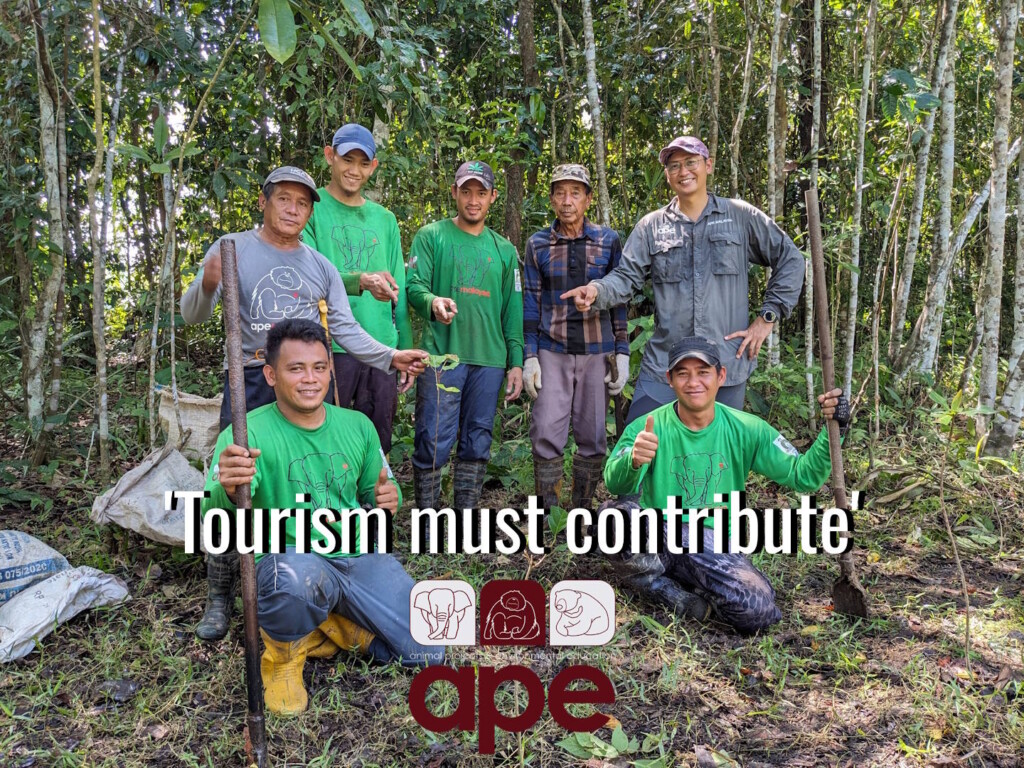
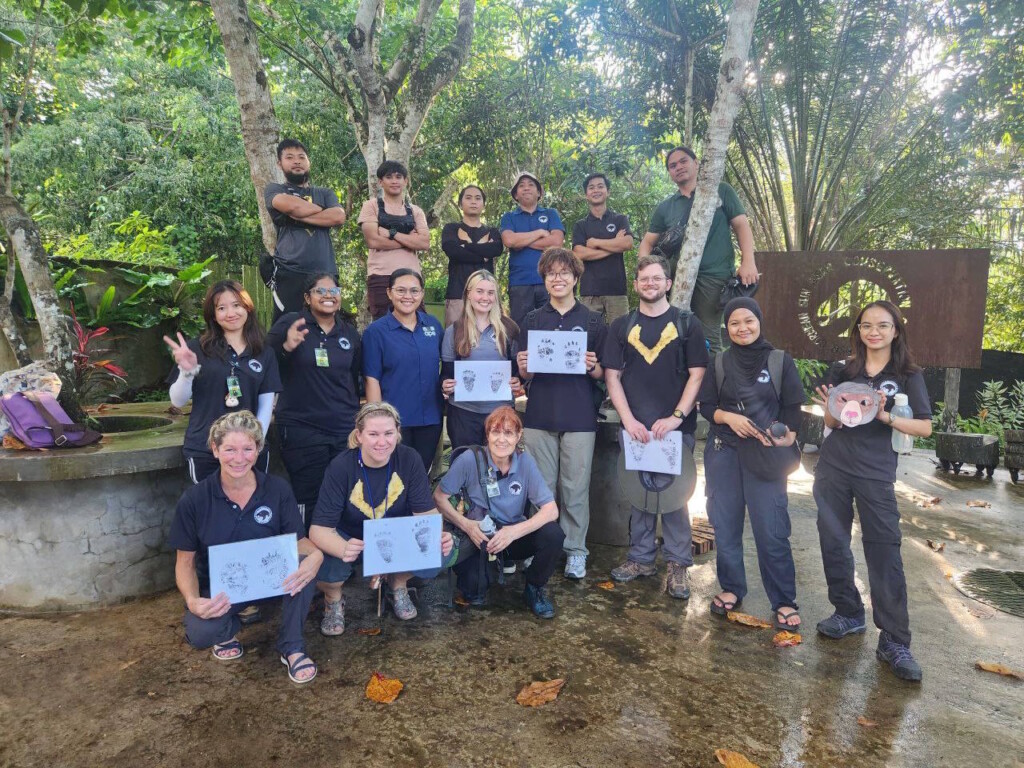
The APE Malaysia field team pictured here includes residents of the local Sukau village.