Can social media content creators promote peace through tourism in Israel and Palestine?

As the fragile first phase of a new peace deal commences in Gaza, Ahmed Abdel Fattah ponders the potential for social media content creators to consolidate connections and promote peace through tourism in Israel and Palestine.
Thanks to “Good Tourism” Insight Partner Tourism’s Horizon: Travel for the Millions for inviting Dr Abdel Fattah to write this “Good Tourism” Insight. (You can write one too.)
A refreshing reminder
At a time when conflicts in the Middle East appear to dominate the headlines, and notwithstanding the recent fresh hope for a lasting peace, it’s easy to overlook the rich cultures and shared experiences of people living in places like Israel and Palestine.
Recently, I came across two YouTube travel documentaries by Stef Hoffer that I believe can change how we perceive these regions. Published in 2022, a year before the tragic events of October 7, 2023, these films offer perspectives that go beyond the often-grim portrayals found in mainstream media. They serve as a refreshing alternative; a reminder of the rich cultural tapestries of both Israelis and Palestinians.
What’s fascinating is how Mr Hoffer invites us to form our own interpretations of his documentaries. He also expresses his desire to explore alternative sources of information about Israel and Palestine.
The power of alternative media
Arabic and Israeli traditional media usually paint a grim picture, often bombarding us with headlines featuring charged words like “aggression”, “inhumane”, “occupied”, “genocide”, “terrorists”, and “extremists”.
However, Hoffer’s documentaries, Journey Through Palestine and Journey Through Israel, portray a vibrant and colourful scene, highlighting the many similarities between Israeli and Palestinian lives. Family gatherings centred on food and tradition are celebrated, making it clear that beneath the political and military turmoil, there’s a lot of common ground.
Those who watch these two films may be pleasantly surprised to find stories filled with cultural richness and human connection. For instance, the scene featuring the Ibrahimi Mosque, a significant religious site in Hebron, holds deep spiritual importance for Jews, Christians, and Muslims alike. This site serves as a place of worship for all three faiths, illustrating that shared heritage exists even amid political and military tensions. It’s heartwarming to see Israeli Jews and Palestinian Muslims praying peacefully alongside each other.
A glimpse into everyday life
One of the most striking aspects of Hoffer’s documentaries is how he presents the everyday lives of Israelis and Palestinians, showcasing moments that resonate with us.
You will notice families digging into their favorite dishes; Israeli and Palestinian families enjoying dinners at local restaurants, while people from both communities explore lively markets, whether in Israeli towns or the Arabic souks (markets) in the West Bank.
You will also see young, fashion-forward girls and guys in the West Bank hanging out in trendy outfits alongside conservative Muslim women in veils and men in traditional long dress. The documentaries also highlight Palestinian women in the West Bank driving and participating in market trade.
You may be surprised to spot tourism activities on the Palestinian side, with locals and tourists visiting the Dead Sea and riding the Jericho Cable Car, which offers beautiful views of the area. Hoffer remarks that being in Jericho feels like being “in the Swiss Alps while in a cable car.”
In Israel, the vibe is pretty similar. You can see people in Western-style clothes alongside conservative Israelis; men in black suits and skullcaps, and women in long skirts and scarves, just like Palestinian women in the West Bank.
Audiences might also be surprised to notice the mosques in Israel, especially those situated alongside synagogues and churches. They may also notice the distinctive sound of the Azan, which calls Muslims to prayer.
The nightlife in Tel Aviv showcases a unique and vibrant aspect of Israeli culture, reflecting the city’s diverse influences. As audiences engage with these scenes, they start to realise that the differences between Israelis and Palestinians are often exaggerated in traditional mass media.
Don’t miss the “GT” Insight Bites on tourism, war, and peace
Fostering connections and peace through tourism
The power of these documentaries lies in their ability to challenge stereotypes and help us appreciate the human stories that unite rather than divide. Hoffer’s films focus more on shared experiences and values.
This shift in perspective is crucial for peace through tourism, as it encourages viewers and travellers to engage with both cultures and fosters a sense of empathy. By engaging with these stories, travellers and viewers can become informal ambassadors for peace, spreading awareness and fostering connections that transcend borders.
In a region often characterised by harsh criticism and animosity towards Israel, these documentaries remind us of the many commonalities and fewer differences between Israelis and Palestinians, and between Israelis and Arabs in general.
A vision for the future
As we look to the future and hope for a permanent end to the conflict in Gaza, it is crucial to consider whether social media creators from both Israeli and Palestinian communities, as well as Arab communities in the region, can collaborate beyond political tensions.
By showcasing their shared heritage, beliefs, and culture in a positive light, Israeli and Palestinian content creators could attract tourists to their regions and foster cultural understanding and peace through tourism.
What do you think?
Share your own thoughts about new media, social media, and peace through tourism in a comment below.
(SIGN IN or REGISTER first. After signing in you will need to refresh this page to see the comments section.)
Or write a “GT” Insight or “GT” Insight Bite of your own. The “Good Tourism” Blog welcomes diversity of opinion and perspective about travel & tourism, because travel & tourism is everyone’s business.
“GT” doesn’t judge. “GT” publishes. “GT” is where free thought travels.
If you think the tourism media landscape is better with “GT” in it, then please …
About the author

Ahmed Abdel Fattah is a lecturer at Macao University of Tourism (UTM), where he teaches qualitative research methods, tourism management, and heritage courses. Dr Abdel Fattah received his PhD from Lincoln University in Christchurch, New Zealand.
Ahmed provides training lectures on heritage and special interest tourism products for the UTM Global Centre for Tourism Education and Training, in collaboration with The World Tourism Organization (UNWTO).
Ahmed has practical experience in the hotel and tourism industry, as well as in heritage tourism, across Egypt, the United States, Australia, and New Zealand. He has also served as an overseas program coordinator for The Arab League Educational, Cultural and Scientific Organization (ALECSO) in Lebanon and France. Previously, he taught at various educational institutions in the United States and New Zealand.
Ahmed has a broad range of research interests, with a current focus on religious tourism, established and emerging qualitative research methods in tourism studies, cultural heritage interpretation, visitor management, and post-colonialism.
Featured image (top of post)
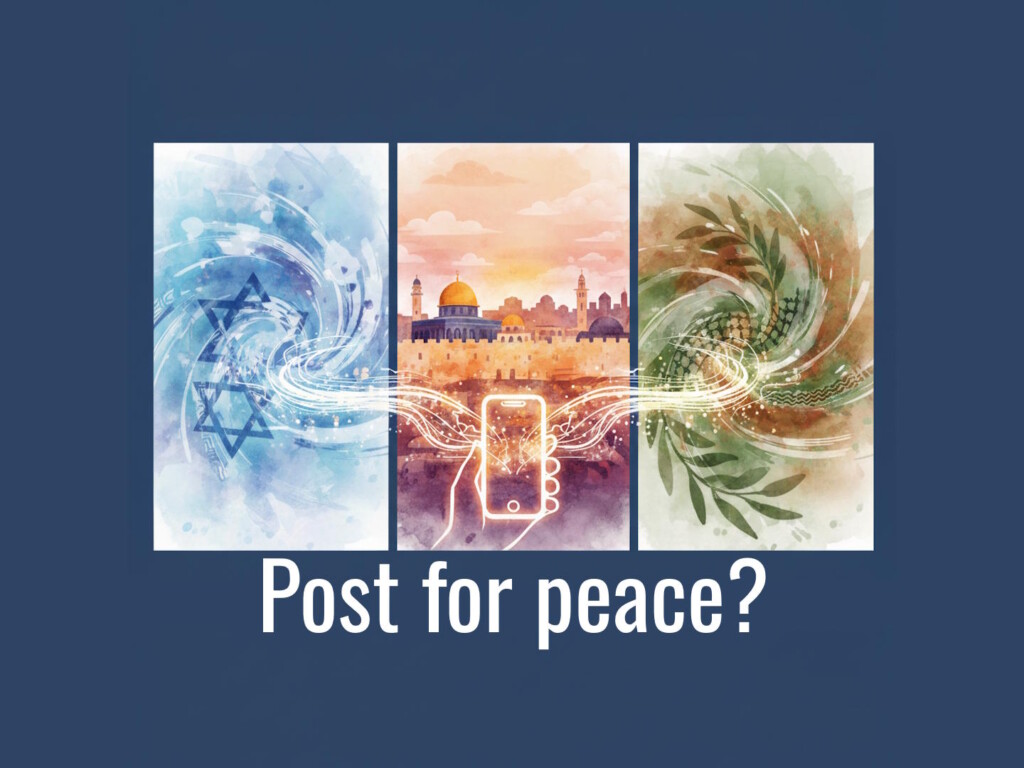
A Gemini-generated image prompted by the headline of this post: “Can social media content creators promote peace through tourism in Israel and Palestine?”