Is a travel & tourism career still attractive? Important things to understand in 2025

Is a travel & tourism career still attractive in 2025? What is the most important thing that a young person should understand before embarking upon a career in tourism?
That is your “GT” Insight Bites challenge. Write up to 300 words about the question in the comments at any time. [The deadline for free copy editing, layout, and preview in time for this “GT” Insight Bites compilation has passed.]
UPDATE May 19, 2025 — Your “Good Tourism” Insight Bites
Bites menu
Find a brand that matches your personality
Saverio Francesco Bertolucci, Business Development Specialist, VDB Luxury Properties, Spain
Travel & tourism are intertwined; part of everyone’s lives. Both segments, under the umbrella of hospitality, will always exist and always have appeal.

The key point is to understand the rapidly evolving and competitive market, and to be proactive, sly, and flexible within it.
In a world in which internal promotion systems are becoming rarer and rarer, and where SMEs are struggling to survive in favour of big corporations and international funds, young talents need to understand whether their character matches the requirements of the sector; and, if so, which company aligns with their identity and personal growth trajectory the best.
Matching brand with personality allows youngsters like me to go the extra mile, become entangled with the company’s image and brand awareness, while increasing knowledge and accountability.
It’s only by working for a brand one feels attached to that one can grow, put into practice learnings from books, and add crucial knowledge directly from the field.
Awards, promotions, and great job offers will consequently be on the table.
A travel & tourism career is ‘not for everyone’
Shamiso Nyajeka, Head of Department, Kirirom Institute of Technology, Cambodia

Is a travel & tourism career still attractive in 2025?
Absolutely! But like many things in life, it’s not for everyone; one man’s meat is another man’s poison.
A career in travel and tourism can be incredibly rewarding, but perhaps only for those with the right skills, mindset, and expectations.
Over the years, I’ve had the privilege of joining the career journeys of many tourism students across Africa, Europe, and Asia.
More than once, I’ve been approached by a confused, anxious student nearing the end of their studies, unsure whether they made the right choice. After investing three or four years in a tourism course, they suddenly begin to doubt themselves; wondering if this is really the path they want to follow.
For some, the decision to study tourism was a personal one; for others, it may have been influenced by family or peer pressure. Either way, doubts often creep in when they compare themselves to friends in fields like digital technology, who seem to enjoy better job prospects, higher salaries, or faster career progression.
Some students go on to graduate and shift into entirely different industries; sometimes out of necessity, sometimes because their interest in tourism has simply faded.
That said, one of the great strengths of a tourism qualification is its versatility. It provides transferable skills — communication, planning, time management, teamwork — that are valuable across a wide range of sectors.
Still, managing expectations is crucial. While tourism might sound glamorous — with its promise of travel, events, and meeting new people — the reality often involves long hours, high pressure, and significant emotional labour.
A successful career in tourism takes more than just passion. It demands adaptability, emotional intelligence, critical thinking, and a strong work ethic.
So yes, tourism remains an attractive career; just not a one-size-fits-all path.
Travel & tourism rewards an entrepreneurial spirit
Doreen Nyamweya, Tourism Officer, Nyamira County, Kenya
Is a travel & tourism career still attractive in 2025?

Absolutely! In 2025, a career in tourism is as attractive as ever, and perhaps more fascinating for the younger generations joining or looking to join the workforce.
Even though tourism has evolved significantly — after external shocks that demanded resilience — the fundamental human drive for connection and life-changing experiences persists.
When you think about it, travel & tourism presents immense opportunities in adventure, culture, sustainability, eco-tourism, and digital travel experiences that inspire purpose.
While it is not always glamorous, one must be dedicated, resilient, and passionate about a cause. With that, a career in travel & tourism can be rewarding.
If I had to choose one thing that is most important for young professionals embarking on a career in tourism, it would be entrepreneurial thinking.
Successful tourism professionals build personal brands, businesses, or niche services. They are entrepreneurs. They do not just fit into existing structures, but develop visions that shape the future of the industry.
Therefore, a young person must think beyond the traditional roles if they are to open themselves up to new opportunities. They should nurture their sense of creativity and innovation. They should look ahead to anticipate market needs and trends, identify gaps, and be adaptable to shifts.
Further, an entrepreneurial spirit gives one the ability to take initiative, which, in a dynamic industry, is what will keep one competitive and attractive within the labour market.
Join ‘the care economy; the organising foundation of organic life’
K Michael Haywood, publisher, ‘Destinations-in-Action’, Canada
Whenever we leave our homes to travel, we place our well-being in the care of others; care delivered through cultural awareness, creativity, and craft, with commitments from individual and corporate communities to provide transformative joy.

Those of us who have enjoyed long-lasting careers in travel and hospitality unapologetically believe that tourism is part of the care economy; the organising foundation of organic life. With our focus placed on the well-being of others — hosts and guests — our ultimate reward is tied to moments of achievement: fulfilling needs, solving problems, and making everyone happy.
In the years to come, however, ideal achievements will have to recognise inflection points tied to a revitalised sense of purpose or meaning through, for example:
- a realisation of shared prosperity,
- a renewal of social capital,
- the resolution to inequities, and
- regenerative practices.
All are possibilities when organisations, governments, NGOs, and individuals devote themselves to the creation of value for all stakeholders; efforts requiring commitment, ‘soft’ skills, and unrelenting work; work (not to be denigrated) that can lead to deep and lasting delight when it is directed towards things that matter most.
There are an immense number of multi-faceted tourism-related careers (direct and indirect) available. These careers will evolve in response to not only technological developments, but also to adjusted mind sets based on future-back points-of-view focused on protecting valuable cultural and natural resources, improving people’s lives, and unlocking peoples’ full potential.
Companies and communities must work collaboratively with educational institutions on mentoring and training, correcting neglect, and activation. Their purpose must be to create strategic fit among all components of tourism, ensuring that every action taken enhances mutual benefits, and supports the strategic goals of employers and the career goals of employees. All are essential acts of permanent reinvention.
In Spain, tourism graduates find work but earn less
Greg Richards, Professor, Breda University of Applied Sciences; Professor, Tilburg University, Netherlands
Is a travel & tourism career still attractive in 2025?

Apparently not in Spain. Research by Pérez and Aldás (2024) on the career trajectories of graduates from Spanish universities [PDF in Spanish] shows that tourism graduates consistently earn less than their counterparts in other fields, and are less likely to be working at the level for which they should have been trained.
The report argues “work in sectors such as hospitality and tourism is more characterised by seasonality and […] lower quality occupations. This explains why the fields most linked to these sectors [ — tourism, hotel management, events, gastronomy and culinary arts — ] have worse results in the adjusted indicators of employment”.
In terms of the proportion of graduates working at a level appropriate to their studies four years after graduation, the lowest rankings of all studies are found in the general area of tourism and hospitality (with the exception of criminology)
- Gastronomy (Gastronomía y artes culinarias) is ranked 28th out of 32 fields in social sciences and law
- Hospitality management (Gestión hotelera) 29th
- Criminology (Criminología) 30th
- Tourism (Turismo) 31st
- Events (Protocolo y eventos) 32nd
Interestingly, the field of events, which seemed to be a major tourism-related growth area in the wake of falling numbers of enrollments in tourism-related programmes, is the lowest rated in terms of employment for social science graduates. This may explain why some events programmes are now also struggling to attract students.
Despite comments in the report about the quality of tourism employment, however, tourism graduates do not fare too badly in terms of securing full-time and permanent contracts.
In Bhutan, a career in tourism is ‘still attractive’ but ‘no longer easy’
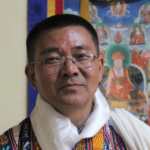
Dorji Dhradhul, author and creativist, Bhutan (former Director General, Bhutan Tourism)
In 2025, a career in travel and tourism remains attractive; especially in Bhutan, where the tourism policy is shaped by the visionary approach of High Value, Low Volume (HVLV).
Unlike mass tourism destinations that prioritise visitor numbers, Bhutan emphasises sustainability, cultural integrity, and environmental preservation. This makes the tourism sector in Bhutan both prestigious and purposeful.
However, Bhutan’s tourism landscape is undergoing a transformation. It is no longer the ‘lowest hanging fruit’ that once allowed casual, low-effort participation to flourish. The new era of Bhutanese tourism demands professionalism, passion, and a long-term vision.
For young people considering a career in tourism, the most important thing to understand is that it is no longer a fallback option or a side hustle; it must be treated as a serious, full-fledged profession.
To thrive in this space, young aspirants must equip themselves with strong ethical values, innovative thinking, and deep knowledge of Bhutan’s unique selling points: spirituality, culture, environment, and the philosophy of Gross National Happiness. They must be ready to create meaningful, high-quality experiences for discerning visitors who seek depth.
Moreover, the future of tourism in Bhutan calls for new competencies: digital fluency, storytelling skills, sustainability literacy, and an ability to connect global trends with local realities. It also calls for building networks, contributing to nation-building, and positioning Bhutan as a beacon of responsible tourism.
In essence, a career in tourism in Bhutan is still attractive, but it is no longer easy. It requires commitment, competence, and care.
Those who are serious about joining this noble profession will not only find it rewarding but also play a vital role in safeguarding Bhutan’s identity while advancing its global presence.
What do you think?
In a comment below share your own thoughts about travel & tourism careers.
SIGN IN or REGISTER first. (After signing in you will need to refresh this page to see the comments section.)
Or write a “GT” Insight or “GT” Insight Bite of your own. The “Good Tourism” Blog welcomes diversity of opinion and perspective about travel & tourism, because travel & tourism is everyone’s business.
This is an open invitation to travel & tourism stakeholders from any background to share their thoughts in plain English with a global industry audience.
“GT” doesn’t judge. “GT” publishes. “GT” is where free thought travels.
If you think the tourism media landscape is better with “GT” in it, then please …
Featured image (top of post)
Map image with symbols by Harish Sharma (CC0) from Pixabay. “GT” added the question: “So, you want a career in tourism?” and the year “2025”.
Previous “GT” Insight Bites
- Wishwashing tourism
- Butler’s conundrum: Air travel and ‘sustainable’ tourism
- What is tourism’s biggest opportunity and/or threat where you are in 2025?
- “GT” Insight Bites: Nostalgia
- “GT” Insight Bites: Geopolitics and tourism
- Tourism stakeholders: Who has an outsized voice? Who has no voice? Who cares?
- Would you abolish taxes on tips?
- Three critics walk into a bar …
- How are emerging technologies transforming the travel & tourism industry?
- What does it mean to be critical of tourism?
- What constitutes ‘progress’ for travel & tourism in 2024?
- Considering a career in tourism? Important things you should know in 2024
- What did tourism learn from the COVID-19 pandemic?
- In 2024, what are the best opportunities for tourism over the next five years?
- Tourism’s biggest challenges & threats over the next five years to 2028
- On empowerment, promotion, and the power of expression
- On enrichment, repatriation, the double-edged blade, and war
- On tourism technology, progress, and local benefit-sharing
- Hey, travel & tourism, are you ‘neocolonialist’?
- Who’s the new boss? Asia Pacific tourism industry association seeks leader
- ‘The hospitality industry offers a great career.’ Really?
- Cruise ships: Blessing or blight?
- Tourist vs traveller: What’s the difference?
- The heads of finance, operations, and PR walk into their boss’s office …
- Yes, Tourism Minister
- What are tourism’s biggest challenges & threats over the next five years?
- ‘Tourism is built on the backbone of white supremacy’. What do you think?
- Really, what’s the difference? ‘Sustainable tourism’ vs ‘regenerative tourism’
- Want a career in tourism? Important things you should know
- Diverse perspectives on travel & tourism and a fairer world
- Diverse perspectives on economic degrowth and tourism
- Diverse perspectives on visitor dispersion