
And the most important colleagues in a community-based tourism project are …


… community members, of course!
In his second “Good Tourism” Insight, community-based and sustainable tourism consultant Peter Richards reflects on the most important thing he has learned during his career so far, and how to make it so.
While working at the crossroads of tourism and community development for more than 20 years, one gradually accumulates personal lessons learned; yes, mainly from making mistakes. The most profound lesson I have learned is the need to consciously approach working with community members as colleagues rather than as beneficiaries.
There are of course significant differences between professional consultants and ‘local community colleagues’ working in small, remote villages; including vast gaps in power, privilege and access to resources. Nevertheless, I am convinced that the closer we can move towards a relationship of colleagueship, and away from the (at least) residual arrogance and entitlement of ‘donor’ and ‘beneficiary’ relationships, the more successful our work and working relationships will be.
I am not attacking the idea of international aid. For all of its shortcomings, I have huge respect for the principle of sharing goodwill, money, and expertise between countries. However, I am advocating for a conscious re-conceptualisation of ourselves when we work in the field. Simply, when we approach local community members as our colleagues, we are orientating ourselves towards mutual respect. And we are explicitly acknowledging that we have much to learn from each other.
‘Community’, agency, and me
Ironically, in this learning journey, the very word ‘community’ can be an obstacle.
As we strive to support local people, and be sensitive to cultural differences and ways of life, our industry continually refers to ‘community’. In our effort to respect alternative spaces in a homogenised global society, we agree to defer to ‘communities’. There is a huge amount of good will and intention in this effort.
I am not proposing that our industry avoid using the words ‘community’ and ‘communities’. However, we do need to be more alert to how the word ‘community’ can so easily become a means to separate ‘them’ from ‘us’.
Also see Jim Butcher’s “GT” Insight
“Tourism’s democratic deficit”
The ‘othering’ trap lies along the whole spectrum of perspectives that experts bring to ‘communities’. To those seeking to alleviate poverty, any economic activity regardless of consequences can be justified as better than nothing for ‘needy’ and ‘impoverished’ communities. To those seeking to preserve cultural heritage, the coddling of ‘vulnerable’ and ‘at-risk’ communities can become a mission to to shield ‘them’ from outsiders.
In the end, all of us, community-based tourism consultant or tourist, can so easily fall into that trap. We can consider it ‘our job’ to determine what’s best for a community. We can objectify the community and deny agency to the people within it; agency which we take for granted as a right for ourselves.
‘Long Necks’ and longer stories
I was particularly struck by this dynamic as I worked on the UN International Trade Center (ITC)’s Myanmar Inclusive Tourism Project in Kayah state.
Tourists were eager to visit ethnic Kayan people, better known as the ‘Long Neck Karen’, in their traditional homeland. Kayan women are famous for their practice of decorating their necks with heavy, brass rings. While many visitors expected to see a bucolic, agricultural Eden, the reality was that many of the villagers had fled war and death and spent decades in camps along the Thai border. Many Kayan refugees had gained experience selling trinkets in the so called ‘human zoo’ gated communities in Thailand. They were determined to leverage that experience when they returned home; but on their own terms, rather than under the control of other people.
Also see the “GT” Insight by Movono, Scheyvens, & Auckram
“What do the people want? Reimagining tourism in the Pacific”
It was fascinating to listen to people’s varied opinions on this. Among the tourists, ‘experts’ of various backgrounds interpreted the villagers’ tiny stalls through their own ideologies and agendas. Those wishing to see cultural ‘authenticity’ were often disappointed by the stalls. The very idea of money and entrepreneurship conflicted with their expectations of rural purity. For those who wished for economic development and modernisation on the community’s behalf, the vendors’ efforts were not commercial enough.
Simple agency and aspirations borne of stark human experience were negated.
Our gazes, from left and right ends of the spectrum, fall in patterns of judgement.
How to form collegial relationships with communities
There is a middle way. There are tools that can empower communities to assess their own situations, aspirations, threats, and opportunities, to make their own decisions, and to choose their own partners.
Organisations and consultants can help community members become more aware of issues that lie outside of their direct experience. ‘We’ can help ensure that decisions take into account important social and environmental considerations. However, we need to be firm with ourselves that we will commit to this endeavour as colleagues.
We will will share. We will learn. We will respect. We will co-create.
In the field of community-based tourism (CBT), there are useful tools and techniques to support co-creation. Among the most important are:
- Taking time to build trust with community members before inviting them to engage in tourism. By making time to meet local people, and joining their daily work, we can earn trust and learn about local life and priorities;
- Community study, alongside local people, to understand local livelihoods, history, and their cultural and agricultural calendars, and what local people will feel proud and comfortable to share with visitors.
A ‘long list’ of potential product ideas — those that community members feel good about sharing with tourists — can then be shared with tour operators and other prospective partners to shortlist products that tourists are most likely to want.
- Local guide training, which builds local community members’ skills and confidence to tell their own stories, in their own voices. This training is less about content and more about process; how to deliver these stories well.
These are just a few of the tools and techniques that our project teams have developed over the past 20 years to help communities engage in tourism on their own terms.
Even using these tools, while we strive for the meaningful and valuable goal of creating local benefits through tourism, we need to hold our words very gently.
In this world of immense and beautiful diversity, working as colleagues seems a good place to start, to cooperate and collaborate towards mutually valued work.
In wishing aspiring community-based tourism project managers the best of luck, I would venture to offer them this piece of advice: Learn how best to work with local people, together, side by side, as colleagues.
As I write this …
As I write this, today (June 30, 2021) is my last day working on the ITC’s Myanmar Inclusive Tourism Project. For more than six years, our team of local, regional, and international specialists worked alongside local community members, tour operators, government, and NGOs to develop fun, inspiring local experiences, through a rigorous community-based tourism (CBT) development process.
It has been a deeply precious journey for which I feel huge gratitude.
Along the way, we shared the exciting challenge of developing respectful cultural experiences with the Kayan.
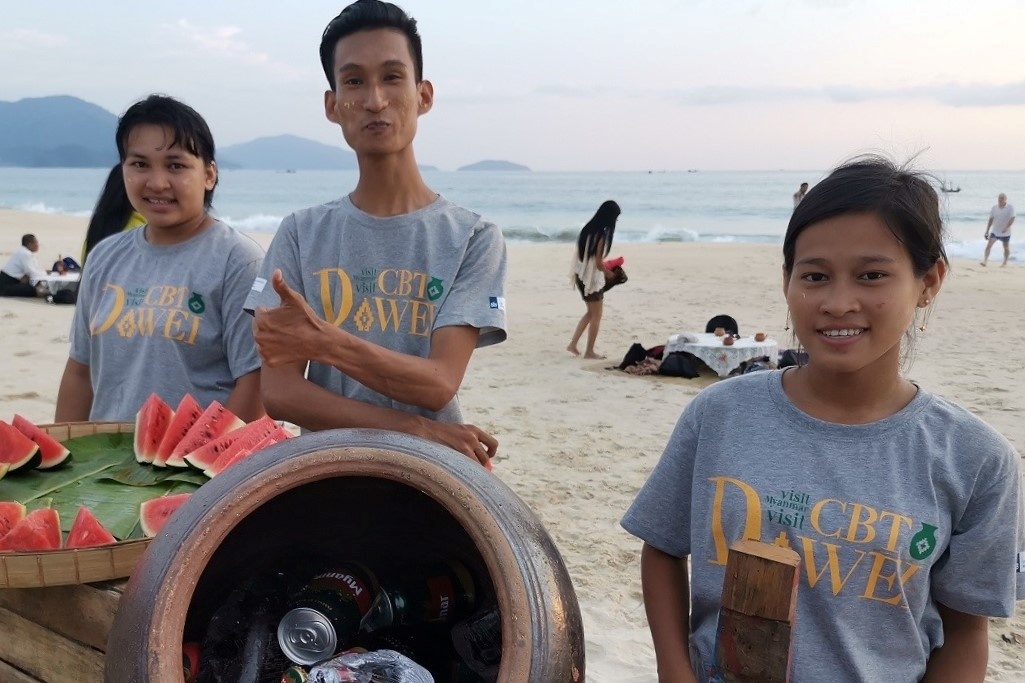
In the emerging south of Myanmar, we had the chance to imagine new models of CBT in Dawei, a leisure and beach destination.
We worked hard, argued constructively, poured love and effort into our craft, and experienced much to be happy and grateful for.
Also see Peter Richards’ first “GT” Insight
“A CBT dilemma: COVID’s ‘new normal’ vs ‘back to normal’”
Finally, as with so much meaningful work in Myanmar, our work and aspirations have become the victims of bigger, darker, sadder forces of violence and greed.
There is some consolation that the lessons we learned do still have value.
During the COVID months, working from home allowed our team to collect, synthesise and organise our body of knowledge into an online course, delivered on ITC’s Online SME Academy. Without COVID, we would never have had the time to achieve this. The first round of the online course was delivered in May and June of 2021 as a blend of independent study (online modules) and interactive workshops.
Barring a few technical glitches, the course was well received, with active participants and excellent sharing and discussions via Zoom and online forums.
“I am super impressed by the quality of this training. The training has strengthened my enthusiasm about the potential of CBT and provided a lot of guidance about how this can be achieved on the ground. I can’t wait to get back out there in The Gambia and elsewhere to learn by doing! Congratulations to the team.” _ Lucy McCombes, Senior Lecturer in Responsible Tourism Management, Leeds Beckett University, UK.
This body of knowledge does a good job of sharing detailed ‘how to’ steps to develop responsible local experiences in partnership with local community members and responsible tourism businesses. Hopefully it will motivate a crew of well-prepared CBT trainers. However, there are questions it doesn’t answer. And they are what inspired me to write this article.
What do you think? Share a short anecdote or comment below. Or write a deeper “GT” Insight. The “Good Tourism” Blog welcomes diversity of opinion and perspective about travel & tourism because travel & tourism is everyone’s business.
Featured image (top of post): Have choice, will trade. A Bangkok night market from above, January 2018. By Sam Beasley (CC0) via Unsplash.
About the author
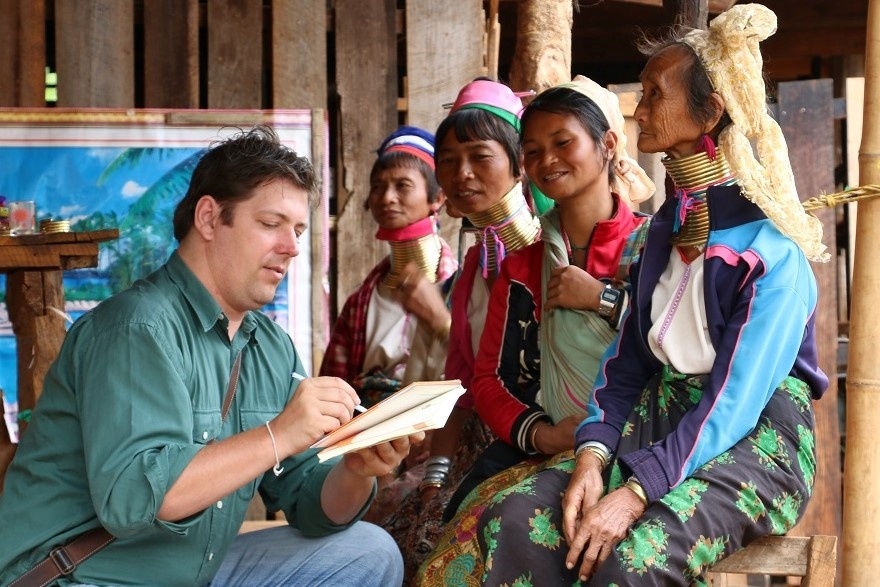
Peter Richards works at the crossroads of responsible tourism and community development in the Greater Mekong Subregion. His core skills include sustainable tourism project development and management; participatory training; facilitating market access partnerships between local communities and tourism businesses; and sustainable tourism standards development and auditing.
Peter is currently Project Manager of the EU-funded SWITCH-Asia TOURLINK project, which aims to green the Thai tourism supply chain via a business partnership-building approach involving EU buyers, Thai tour operators, and their suppliers.
From 2015 to June 2021, Peter worked with the International Trade Centre’s Myanmar Inclusive Tourism project in Kayah State, Eastern Myanmar, and Dawei District, Tanintharyi region, Southern Myanmar.
In 2015, Peter earned a MSc with Distinction in Responsible Tourism Management, and won the UK Association for Tourism in Higher Education’s Prize for Best Post Graduate Student of Tourism. He regularly lectures on tourism and community development, and facilitates study tours and field research for students and professionals.
Peter also works with his wife Premruethai Tosermkit and veteran community worker Potjana Suansri to operate the award-winning The Family Tree, which supports more than 40 Thai community groups, local artists, and social and environmental initiatives. The Family Tree is responding to the COVID crisis by producing Triphala Plus, an Ayurvedic herbal drink that “helps to boost the immune system”.



 wpDiscuz