
Nigeria tourism’s squandered opportunities

Poor vision, a lack of political will, infrastructural decay among other shortcomings are responsible for Nigeria not being the number one country when it comes to tourism in Africa. All the ingredients were there at independence, and for those who were around then, the future of tourism in Nigeria must have seemed so bright. But just like in many other facets of national life, it has been a story of unfulfilled potential, of squandered opportunities.
Nigeria’s central geographical location in Africa means it is easily accessible from all parts of the continent; north, south, east and west. Combined with the fact that the country is one of the top business destinations in Africa as a result of being the leading oil producer on the continent, it only seemed natural that it would be its leading aviation hub, not only for intra-African travel but also to link Far East countries like China and Japan to the West – the USA, Latin America, the Caribbean.
A few countries have built their tourism by first positioning themselves as aviation hubs and also establishing national carriers as tools for both diplomacy and tourism. The Middle-Eastern Emirates of Dubai and Abu Dhabi, as well as Qatar are recent examples. Closer to home, Ethiopian Airlines toes the same line.
At independence, Nigeria already had a two year old airline, the West African Airways Corporation (WAAC) Nigeria which was later rebranded Nigeria Airways. In its heyday, Nigeria Airways flew to over 40 destinations both local and international. Apart from major Nigerian cities, its route included major African capitals starting from the West African sub region, a few cities in the Middle-East, multiple European cities and New York. Unfortunately, the airline was run into the ground due to mismanagement and corruption and ceased operations in 2003. From its ashes rose Virgin Nigeria, which later became Air Nigeria. Both suffered a similar fate.
In comparison, Ethiopian Airlines, which was founded a few years before Nigeria Airways, now serves 19 domestic and 94 international destinations (including 5 Nigerian cities), raking in profits in the process.
Unlike some countries that have based their tourism inflow solely on location and man-made attractions, Nigeria is blessed with jaw-dropping natural wonders and diverse wildlife.
A tropical country with clement weather all year round, Nigeria’s geography means it has a variety of vegetation broadly divided into forests (mangrove swamps, fresh water swamps and rain forest) and savannahs. These translate into diverse wildlife comprising thousands of bird and animal species. The Cross River rainforest alone is touted as one of the most bio-diverse ecosystems in the world.
A few countries in East and Southern Africa have built an industry around their wildlife, boosting their economies in the process. Many of the animals that attract tourists to those countries are present in Nigeria. From the lions and leopards found at the Kainji Lake and Yankari National Parks, to the elephants and gorillas at the Cross National Park and many more. Furthermore, the white-throated monkey (also known as the red-bellied monkey), one of the rarest animals in the world, can only be found at the Okomu National Park in Nigeria. While relatively bountiful at independence, all the above-named animals (apart from the leopard) are critically endangered and on the verge of extinction.
Unlike the animals that are now rarely seen, the numerous rock formations and waterfalls that dot the Nigerian landscape – from the hills in the south to the plateaus in the north – stare us in the face, crying for attention and development into world standard tourist sites.
Too numerous to mention, they include Idanre Hills, Olumo Rock, Wikki Warm Springs, Agbokim Waterfalls, Erin-Ijesha Waterfalls, Zuma Rock, Ikogosi Warm Springs, Farin Ruwa Waterfalls, Gurara Waterfalls, Owu Waterfalls, Matsirga Waterfalls … and many more. They were all there 57 years ago. They are in no better state now than they were then.
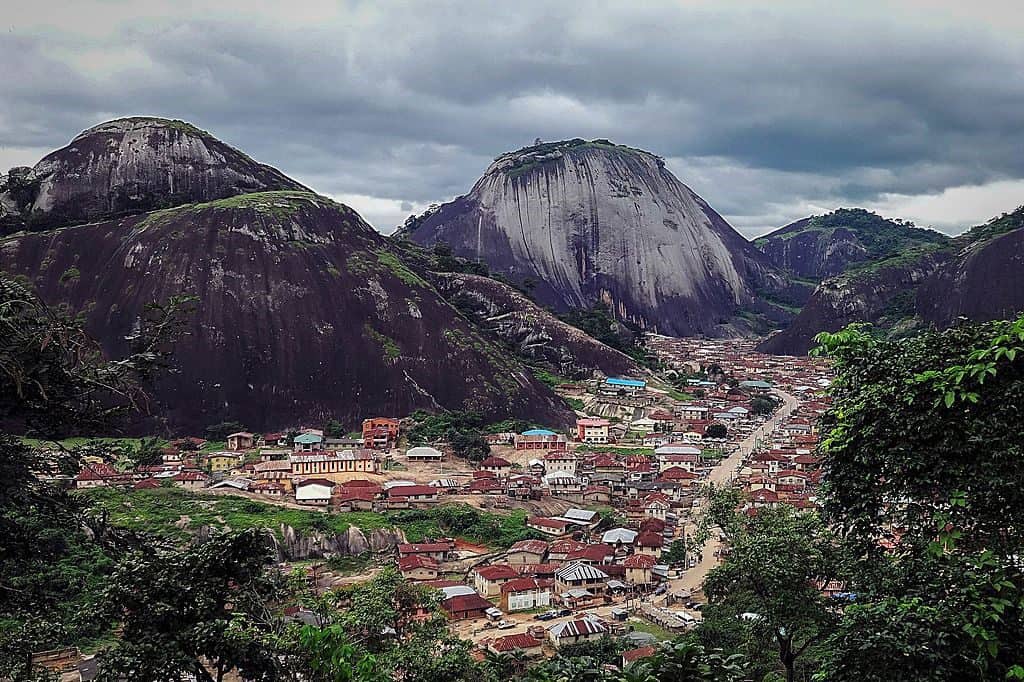
The Idanre hills are a group of dome-shaped porphyritic granite inselbergs located in Akure, Ondo state, Nigeria. By Dotun55 (CC BY-SA 4.0), via Wikimedia.
Another advantage Nigeria has naturally, is an extensive Atlantic Ocean coastline measuring 853km, running through seven States; Lagos, Ondo, Delta, Bayelsa, Rivers, Akwa Ibom and Cross River. To put it in perspective, this is almost twice the length of Kenya’s coastline and more than 10 times that of Gambia (80km). This is in addition to numerous inland waterways – rivers, creeks and lagoons.
Coupled with great weather all year round, it is amazing that waterfront infrastructure and the beach culture are practically non-existent in Nigeria. The glaring example is Lagos, Africa’s most populous city and Nigeria’s commercial and entertainment capital. You would expect that five-star hotels, restaurants, casinos, and other hospitality outlets would line the long stretch of beaches, helping to create a water-centred lifestyle capable of attracting tourists from around the world.
On the contrary though, many of the beaches have lost their allure. Rather, the present generation is regaled with stories of pristine beaches and clear blue water at locations like Tarkwa Bay and Bar Beach, with comparisons to places like Miami. The stories are that of retrogression, not development.
Nigeria is the most populous African country and the most populous Black nation in the world. More impressive than the number of its inhabitants is the diversity of its people. The country is a multinational state with 500 ethnic nationalities and a commensurate number of languages.
This variety has thrown up cultures over the years, some still influencing present day life across the Atlantic – in the Americas and the Caribbean. The country’s rich history includes ancient civilisations dating back hundreds of years (Nok, Ife, Benin to name a few), and the attendant stories and artefacts.
You would expect a multitude of functional, up-to-date museums to help preserve the past and guide the future. Of course, this also generates tourism revenue, with Africans in the Diaspora trooping in to learn more about their roots and a great past. But alas! Most of the museums are dying, worse off than they were in 1960.
Thankfully, the festivals celebrating the indigenous peoples’ culture still remain. It is doubtful however, if any of the festivals are self-sustainable, talkless of adding revenue to the national coffers.
The Durbars in Kano and other parts of the North, the Eyo Festival, the Osun Osogbo Festival, the Ojude Oba Festival, the Calabar Carnival and Festivals, the Sango Festival, the New Yam Festival, the Argungu Fishing Festival and so many more can help drive Nigeria’s tourism.
Is there still hope? Certainly! Opportunities have been squandered but the potential remains. With global dependence on fossil fuels reducing at an increasing rate – which translates to diminishing revenue for an oil-dependent country like Nigeria – maybe, just maybe there would be a rethink and a concerted effort led by government to tap into Nigeria’s tourism goldmine.
Source: Read the full op-ed at This Day.
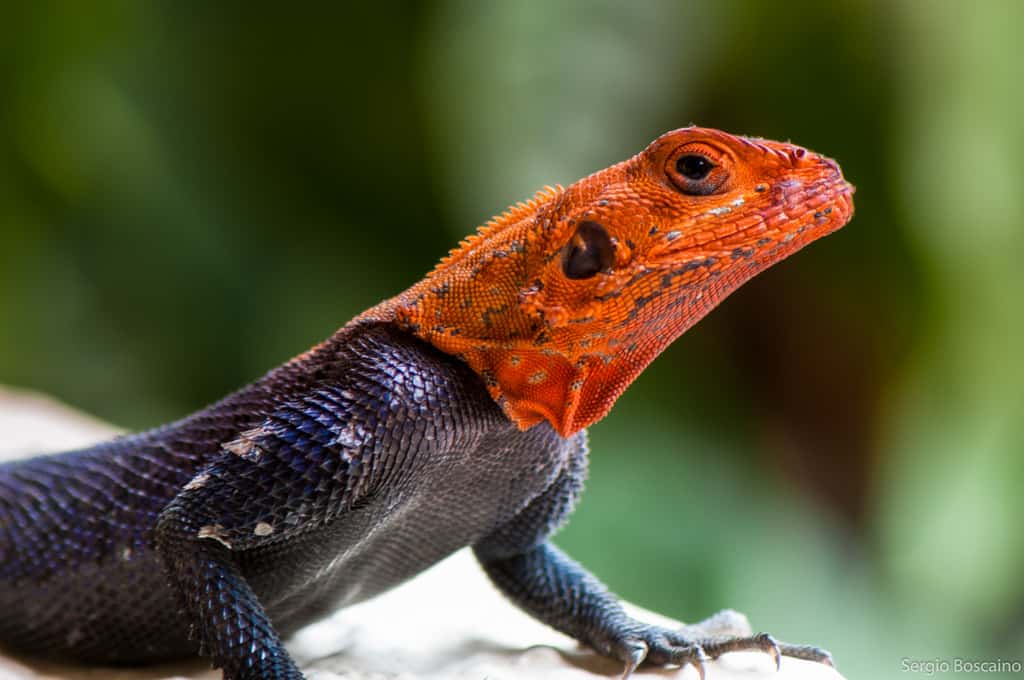
Featured image: The common agama, red-headed rock agama, or rainbow agama (Agama agama) is a species of lizard from the Agamidae family found in most of sub-Saharan Africa, including Nigeria where this image was taken. By Sergio Boscaino (CC BY 2.0) via Flickr.
Related posts
 wpDiscuz